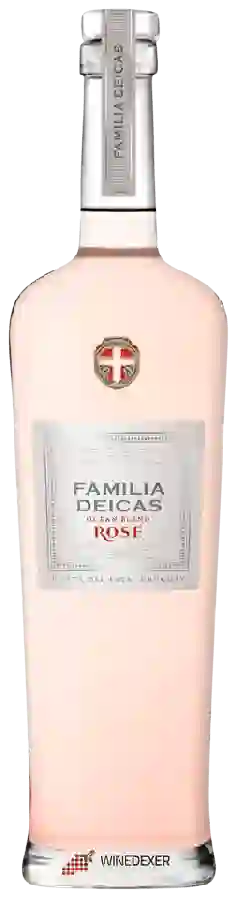
Winery Familia DeicasOcean Blend Rosé
 Pink wine


This wine generally goes well with
The Ocean Blend Rosé of the Winery Familia Deicas is in the top 80 of wines of Juanico.
Discover the grape variety: Cortese
A very old variety, cultivated for a very long time in Piedmont in northwestern Italy, it can also be found in other Italian wine regions. It is known in Germany, Switzerland, Argentina, Mexico, Brazil, the United States, etc. It is virtually unknown in France.
Last vintages of this wine
The best vintages of Ocean Blend Rosé from Winery Familia Deicas are 2019
Informations about the Winery Familia Deicas
The Winery Familia Deicas is one of of the world's great estates. It offers 86 wines for sale in the of Juanico to come and discover on site or to buy online.

The wine region of Juanico
The wine region of Juanico is located in the region of Canelones of Uruguay. Wineries and vineyards like the Domaine Familia Deicas or the Domaine Familia Deicas produce mainly wines red, white and pink. The most planted grape varieties in the region of Juanico are Tannat, Cabernet-Sauvignon and Merlot, they are then used in wines in blends or as a single variety. On the nose of Juanico often reveals types of flavors of vanilla, coffee or floral and sometimes also flavors of dried fruit, cream or tropical.
The wine region of Canelones
The Canelones administrative department, Northeast of the Uruguayan capital of Montevideo, is home to the majority of Uruguay's Vineyards and accounts for aRound 60 percent of all wine produced in the country. It Lies in the South of the small South American country, where the majority of vines are planted, inland from the Atlantic coast and the Rio de la Plata estuary. The region itself covers a broad arc approximately 50km (30 miles) Deep, drawn clockwise from the northwestern outskirts of Montevideo round to the coastline east of the capital city. The eponymous administrative capital of the region lies 50km (31 miles) to the north of Montevideo.
The word of the wine: De-vatting
Separation of the fermented juice from all solid particles (skin, pips, deposit of lees) by transferring it to a second tank.