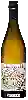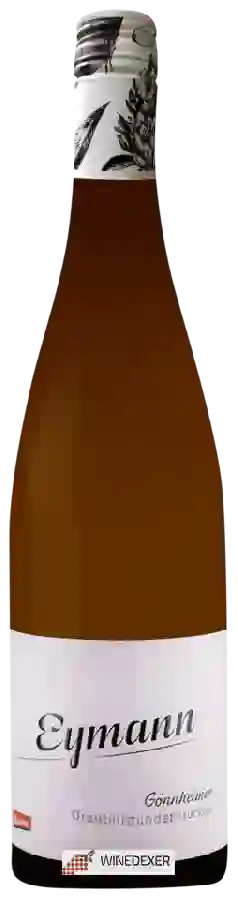
Winery EymannGönnheimer Grauburgunder Trocken
 White wine


In the mouth this white wine is a .
This wine generally goes well with pork, cured meat or mushrooms.

Taste structure of the Gönnheimer Grauburgunder Trocken from the Winery Eymann
Light | Bold | |
Dry | Sweet | |
Soft | Acidic |
In the mouth the Gönnheimer Grauburgunder Trocken of Winery Eymann in the region of Pfalz is a .
Food and wine pairings with Gönnheimer Grauburgunder Trocken
Pairings that work perfectly with Gönnheimer Grauburgunder Trocken


Original food and wine pairings with Gönnheimer Grauburgunder Trocken

The Gönnheimer Grauburgunder Trocken of Winery Eymann matches generally quite well with dishes of pork, spicy food or mushrooms such as recipes of very simple spaghetti carbonara, curried coral lentils or roasted filet mignon in cider.
Details and technical informations about Winery Eymann's Gönnheimer Grauburgunder Trocken.
Discover the grape variety: Elbling
Crisp, light dry whites with a pale robe, slender palate and cutting acidity, showing delicate aromas of lemon, green apple, white flowers, fresh-cut grass and mineral, slaty notes. Often vinified as sparkling (Sekt, Crémant) where its nerviness shines. Star of the Luxembourg Upper Moselle schist slopes (Elbling AOP) and the upper German Mosel. Very old Germanic variety, probably introduced by the Romans.
Last vintages of this wine
The best vintages of Gönnheimer Grauburgunder Trocken from Winery Eymann are 2017, 2018
Informations about the Winery Eymann
The Winery Eymann is one of of the world's great estates. It offers 46 wines for sale in the of Pfalz to come and discover on site or to buy online.

The wine region of Pfalz
Fleshy, dry, fruity Riesling is the region's signature: yellow peach, apricot, ripe citrus, lovely mineral tension. Germany's largest red-wine area (40%), with silky Spätburgunder showing red fruit and spice, darker structured Dornfelder, supple Portugieser. Some rounded Pinot Blanc and Pinot Gris. A 23,640 ha vineyard along the Haardt, among Germany's warmest (>2,000 h of sun).
The word of the wine: Discharge
In the traditional method, elimination of the yeast deposit formed during the second fermentation in the bottle.