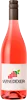
Winery EstandonRetour aux Sources Rosé
 Pink wine



In the mouth this pink wine is a with a nice freshness.
This wine generally goes well with pork, vegetarian or poultry.
Taste structure of the Retour aux Sources Rosé from the Winery Estandon
Light | Bold | |
Dry | Sweet | |
Soft | Acidic |
In the mouth the Retour aux Sources Rosé of Winery Estandon in the region of Provence is a with a nice freshness.
Food and wine pairings with Retour aux Sources Rosé
Pairings that work perfectly with Retour aux Sources Rosé



Original food and wine pairings with Retour aux Sources Rosé

The Retour aux Sources Rosé of Winery Estandon matches generally quite well with dishes of pork, shellfish or vegetarian such as recipes of stuffed artichoke, festive sea pot or salmon and goat cheese quiche.
Details and technical informations about Winery Estandon's Retour aux Sources Rosé.
Discover the grape variety: Belair
Intraspecific crossing between the barlinka and the Alphonse Lavallée obtained in 1974 in South Africa by E.P. Evans and P.J.L. Ellis. In the same country and with the same parents, other varieties were created such as happiness, la rochelle, ... . Belair is registered since 2012 in the Official Catalogue of table grape varieties list A2.
Informations about the Winery Estandon
The Winery Estandon is one of of the world's great estates. It offers 134 wines for sale in the of Coteaux Varois en Provence to come and discover on site or to buy online.

The wine region of Coteaux Varois en Provence
Côteaux Varois en Provence is a key appellation in the Provence wine region in the far southeast of France. It was introduced in March 1993 to complement the Côtes de Provence title created 16 years earlier. It covers the vineyards of 28 communes North of Toulon, essentially constituting the western third of the Var department. Côteaux Varois wines are red, white and rosé, although the latter is the dominant colour (as is the case almost everywhere in Provence).
The wine region of Provence
Provence is a wine region in the far southeast of France, best known for the quality (and quantity) of its rosé wines and for its Warm, mild Climate. The modernization that is taking place in many of the traditional wine regions of southern France has not yet taken place to the same extent in Provence, but there are Clear signs of change. The region's Grape varieties, in particular, have come under scrutiny in recent decades. Traditional varieties such as Carignan, Barbaroux (Barbarossa from Sardinia) and Calitor are being replaced by more commercially viable varieties such as Grenache, Syrah and even Cabernet Sauvignon.
The word of the wine: Hat
Solid part (marc), composed of pips and skins (sometimes of the stalk), which forms at the top of the tank during fermentation. The pigeage consists in breaking this cap to put back in suspension these elements and to favour the exchanges between the juice and the skins.