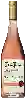
Winery En SaisonRosé
 Pink wine



This wine generally goes well with
Wine flavors and olphactive analysis


On the nose the Rosé of Winery En Saison in the region of Vin de France often reveals types of flavors of microbio, tree fruit or citrus fruit and sometimes also flavors of red fruit, tropical fruit.
Details and technical informations about Winery En Saison's Rosé.
Discover the grape variety: Torrontés riojano
Most certainly of Argentine origin, very well known in this country, particularly in the Rioja and Salta regions. It is said to be the result of a cross between the Muscat d'Alexandrie and the Listan Prieto Noir, also known as Criolla Chica. We can note its resemblance with the torrontés sanjuanino, most certainly by the fact that it is also resulting from the same crossing. In Spain (Galicia), a grape variety bears the name of torrontés, it is most certainly the fernao Pires. Torrontés riojano is also present in Chile, but in France it is practically unknown.
Last vintages of this wine
The best vintages of Rosé from Winery En Saison are 2015, 2019, 0, 2017 and 2016.
Informations about the Winery En Saison
The Winery En Saison is one of of the world's greatest estates. It offers 1 wines for sale in the of Vin de France to come and discover on site or to buy online.

The wine region of Vin de France
Vin de France is the most basic level of quality for wines from France. These are generally uncomplicated everyday drinks - most often blends, but perhaps also Varietal wines based on a well-known Grape variety such as Cabernet Sauvignon, Merlot, Chardonnay or Sauvignon Blanc. Wines from France are those that do not meet the criteria stipulated by the Protected Designation of Origin (PDO) or Protected Geographical Indication (PGI) laws (see information on French wine labels). This may be because the vineyards are outside the delimited production areas or because the grape varieties or winemaking techniques used do not conform to the rules of the local appellations.
The word of the wine: Crémant
AOC sparkling wine made by traditional method, with specific constraints in the regions of Alsace, Bordeaux, Burgundy, Die, Jura, Limoux and the Loire Valley, as well as in Luxembourg.