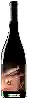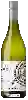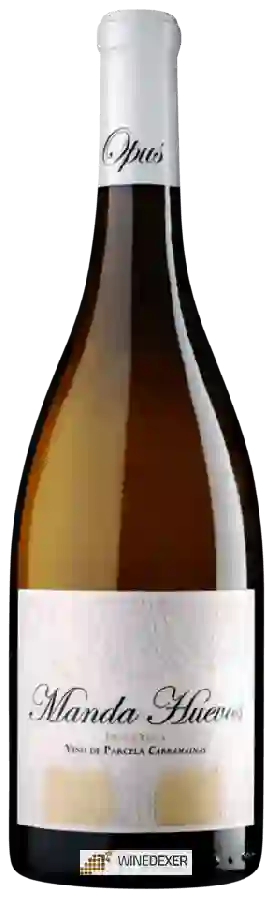
Winery El Escocés VolanteManda Huevos Doble Yema
 White wine


This wine generally goes well with poultry, rich fish (salmon, tuna etc) or shellfish.
Wine flavors and olphactive analysis





On the nose the Manda Huevos Doble Yema of Winery El Escocés Volante in the region of Catalogne often reveals types of flavors of oaky, non oak or earth and sometimes also flavors of microbio, oak.
Food and wine pairings with Manda Huevos Doble Yema
Pairings that work perfectly with Manda Huevos Doble Yema



Original food and wine pairings with Manda Huevos Doble Yema
The Manda Huevos Doble Yema of Winery El Escocés Volante matches generally quite well with dishes of rich fish (salmon, tuna etc), shellfish or poultry such as recipes of marmite dieppoise, chicken and shrimp jambalaya or roast goose, soft.
Details and technical informations about Winery El Escocés Volante's Manda Huevos Doble Yema.
Discover the grape variety: Alvarinho
The white Alvarinho is a grape variety originating from Spain. It produces a variety of grape specially used for the elaboration of wine. It is rare to find this grape to eat on our tables. This variety of grape is characterized by small bunches and small grapes. The white Alvarinho can be found cultivated in these vineyards: South-West, Cognac, Bordeaux, Languedoc & Roussillon, Rhone Valley.
Last vintages of this wine
The best vintages of Manda Huevos Doble Yema from Winery El Escocés Volante are 2015, 2014
Informations about the Winery El Escocés Volante
The Winery El Escocés Volante is one of of the world's great estates. It offers 36 wines for sale in the of Catalogne to come and discover on site or to buy online.

The wine region of Catalogne
Catalonia (Catalunya in Catalan and Cataluña in Spanish) is an autonomous community in the Northeast of Spain. It extends from the historic county (comarca) of Montsia in the South to the border with France in the north. The Mediterranean Sea forms its eastern border and offers 580 km of coastline. The Catalunya D.
The word of the wine: Draft liquor (champagne)
After blending, the wine is bottled with a liqueur de tirage (a mixture of sugar and wine) and a yeast (selected yeasts). The yeast attacks the sugar and creates carbon dioxide. The fermentation, which lasts about two months, is prolonged by an ageing period (15 months minimum in total). The bottle is capped (some rare vintages are capped with a staple and a cork).