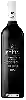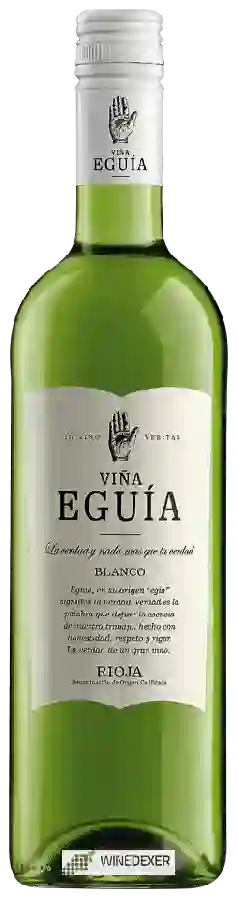
Winery EguíaRioja Blanco
 White wine



In the mouth this white wine is a powerful with a nice freshness.
This wine generally goes well with appetizers and snacks, lean fish or shellfish.

Taste structure of the Rioja Blanco from the Winery Eguía
Light | Bold | |
Dry | Sweet | |
Soft | Acidic |
In the mouth the Rioja Blanco of Winery Eguía in the region of Rioja is a powerful with a nice freshness.
Wine flavors and olphactive analysis


On the nose the Rioja Blanco of Winery Eguía in the region of Rioja often reveals types of flavors of tree fruit, citrus fruit.
Food and wine pairings with Rioja Blanco
Pairings that work perfectly with Rioja Blanco



Original food and wine pairings with Rioja Blanco

The Rioja Blanco of Winery Eguía matches generally quite well with dishes of shellfish, appetizers and snacks or lean fish such as recipes of cuttlefish rust from my grandmother in sète, pretzels (alsace) or quick brandade.
Details and technical informations about Winery Eguía's Rioja Blanco.
Discover the grape variety: Arinto dos Açores
Vivid, mineral whites with a strong volcanic imprint, pale golden robe, tense palate, showing signature aromas of citrus (lemon), white flowers, white-fleshed fruits and remarkable saline marine nuances. Star of the Pico DOP and Biscoitos DOP on the basaltic soils of the volcanic islands of Pico and Terceira, representing the viticultural identity of the Atlantic archipelago. Portuguese white autochtone variety of the Azores, unrelated to continental Arinto.
Last vintages of this wine
The best vintages of Rioja Blanco from Winery Eguía are 2007, 2010, 2011, 0 and 2015.
Informations about the Winery Eguía
The Winery Eguía is one of of the world's greatest estates. It offers 10 wines for sale in the of Rioja to come and discover on site or to buy online.

The wine region of Rioja
Star of great Spanish reds: signature Tempranillo, elegant and complex, with notes of ripe cherry, plum, leather, vanilla and tobacco from American oak ageing. Classification by age: fruity Joven, balanced Crianza, ample Reserva, deep, silky Gran Reserva (5 years, 2 in barrel). Some fresh Viura whites and generous rosés. Spain's first DOCa (1991), 3 sub-zones (Alta, Alavesa, Oriental), 93.
The word of the wine: Extraction
All the methods (pumping over, punching down) that allow the colour and tannins to be extracted from the grape skin during maceration, before fermentation begins. It is also possible to macerate after fermentation, but gently, so as not to extract the tannins from the seeds, which are greener. Because of its solvent power, alcohol favours extraction.