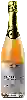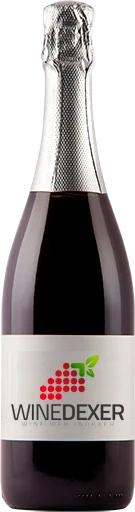
Winery DreyerCremant D'Alsace Brut
 Sparkling wine
This wine generally goes well with poultry, appetizers and snacks or lean fish.

Food and wine pairings with Cremant D'Alsace Brut
Pairings that work perfectly with Cremant D'Alsace Brut



Original food and wine pairings with Cremant D'Alsace Brut


The Cremant D'Alsace Brut of Winery Dreyer matches generally quite well with dishes of shellfish, poultry or appetizers and snacks such as recipes of wok of shrimps with vegetables, chakchouka or dried tomato, feta and green olive cake.
Details and technical informations about Winery Dreyer's Cremant D'Alsace Brut.
Discover the grape variety: Laska
Lively and aromatic whites, pale golden colour, fresh mouth with preserved acidity, with signature aromas of white flowers (acacia), citrus (lemon), green apple and herbal notes. Also made as sparkling Sekt and botrytised dessert wines. Grown in Croatia, Slovenia, Austria, Hungary and Germany. Slovenian and Croatian synonym for Welschriesling.
Informations about the Winery Dreyer
The Winery Dreyer is one of of the world's greatest estates. It offers 4 wines for sale in the of Crémant d'Alsace to come and discover on site or to buy online.

The wine region of Crémant d'Alsace
France's best-selling sparkling wine after Champagne. Fine traditional-method bubbles (min. 9 months on lees), fresh and fruity with signature notes of green apple, pear, white flowers and almond, a taut finish. Dominant Pinot Blanc (roundness, supple base), ample Pinot Auxerrois, mineral Riesling and taut Chardonnay.
The wine region of Alsace
Capital of great French aromatic whites, most often dry and single-varietal. Straight, mineral Riesling (lemon, gunflint), opulent, exuberant Gewurztraminer (lychee, rose, spices), round, smoky Pinot Gris, floral, crisp Muscat, supple Pinot Blanc. Fine, fruity Crémants d'Alsace, exceptional sweet Vendanges Tardives and Sélection de Grains Nobles. 15,500 ha at the foot of the Vosges on varied soils, 51 Grands Crus since 1975.
The word of the wine: Oenologist
Specialist in wine-making techniques. It is a profession and not a passion: one can be an oenophile without being an oenologist (and the opposite too!). Formerly attached to the Faculty of Pharmacy, oenology studies have become independent and have their own university course. Learning to make wine requires a good chemical background but also, increasingly, a good knowledge of the plant. Some oenologists work in laboratories (analysis). Others, the consulting oenologists, work directly in the properties.