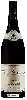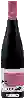
Winery Dr NaglerRüdesheimer Drachenstein Spätburgunder Trocken
 Red wine
In the mouth this red wine is a with a nice freshness.
This wine generally goes well with poultry, beef or veal.
Taste structure of the Rüdesheimer Drachenstein Spätburgunder Trocken from the Winery Dr Nagler
Light | Bold | |
Smooth | Tannic | |
Dry | Sweet | |
Soft | Acidic |
In the mouth the Rüdesheimer Drachenstein Spätburgunder Trocken of Winery Dr Nagler in the region of Rheingau is a with a nice freshness.
Food and wine pairings with Rüdesheimer Drachenstein Spätburgunder Trocken
Pairings that work perfectly with Rüdesheimer Drachenstein Spätburgunder Trocken



Original food and wine pairings with Rüdesheimer Drachenstein Spätburgunder Trocken

The Rüdesheimer Drachenstein Spätburgunder Trocken of Winery Dr Nagler matches generally quite well with dishes of beef, veal or game (deer, venison) such as recipes of beef pot-au-feu, roast veal with black olives or rabbit à la lorientaise.
Details and technical informations about Winery Dr Nagler's Rüdesheimer Drachenstein Spätburgunder Trocken.
Discover the grape variety: Barlinka
- Origin : Very well known in South Africa, it was imported into this country in 1910 from Algeria and then mainly cultivated as a table grape... attempts at vinification were made but without success. It is also known in Portugal, ... in France it is almost unknown.
Informations about the Winery Dr Nagler
The Winery Dr Nagler is one of of the world's great estates. It offers 33 wines for sale in the of Rheingau to come and discover on site or to buy online.

The wine region of Rheingau
Rheingau is one of the most important of Germany's 13 Anbaugebiete wine regions. However it is far from the biggest; with 3,076 hectares (7,600 acres) of Vineyard">Vineyards documented in 2012, its output is around one tenth of that from the Pfalz and Rheinhessen regions. Located on the Rhine a 20-minute drive west of Frankfurt, the -gau suffix denotes that it was once a county of the Frankish Empire. The classic Rheingau wine is a DryRiesling with pronounced Acidity and aromas of citrus fruits and smoke-tinged minerality – typically more "masculine" than its equivalent from the Mosel.
The word of the wine: Pinot meunier
Cultivated in the 19th century in all the northern vineyards, this black grape variety has largely regressed since. Very present in the Marne valley, it constitutes a third of the vineyards in Champagne, alongside pinot noir and chardonnay with which it is often blended. It brings roundness and red and yellow fruit aromas to champagnes. Pinot meunier is also the dominant grape variety in red and rosé wines in the Orleans AOC and the rare Touraine-Noble-Joué, a grey wine. Syn.: meunier.