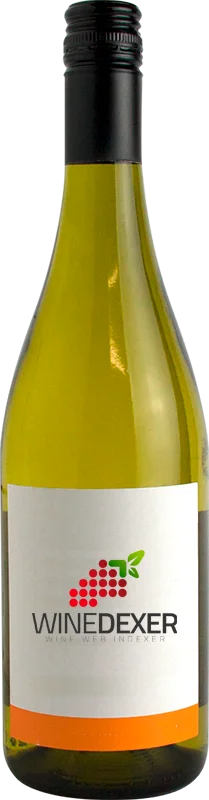
Winery Donato d'AngeloBianco
 White wine


In the mouth this white wine is a powerful with a nice freshness.
This wine generally goes well with vegetarian, appetizers and snacks or shellfish.
Taste structure of the Bianco from the Winery Donato d'Angelo
Light | Bold | |
Dry | Sweet | |
Soft | Acidic |
In the mouth the Bianco of Winery Donato d'Angelo in the region of Basilicata is a powerful with a nice freshness.
Wine flavors and olphactive analysis

Food and wine pairings with Bianco
Pairings that work perfectly with Bianco



Original food and wine pairings with Bianco
The Bianco of Winery Donato d'Angelo matches generally quite well with dishes of shellfish, vegetarian or appetizers and snacks such as recipes of clams in white wine, quiche without eggs or aperitif puff pastries (cheese matches, puff pastries with....
Details and technical informations about Winery Donato d'Angelo's Bianco.
Discover the grape variety: Cortese
A very old variety, cultivated for a very long time in Piedmont in northwestern Italy, it can also be found in other Italian wine regions. It is known in Germany, Switzerland, Argentina, Mexico, Brazil, the United States, etc. It is virtually unknown in France.
Last vintages of this wine
The best vintages of Bianco from Winery Donato d'Angelo are 2014, 2017, 0, 2015
Informations about the Winery Donato d'Angelo
The Winery Donato d'Angelo is one of of the world's greatest estates. It offers 5 wines for sale in the of Basilicata to come and discover on site or to buy online.

The wine region of Basilicata
Basilicata, in Southern Italy, is a region whose name rarely appears in wine circles. It is best known for its red wines made from the Aglianico grape, and in particular for the Aglianico del Vulture appellation. It has only four DOCs, which collectively cover only two of every 100 bottles produced here. The remaining 98% is sold under IGT or, more likely, Vino da Tavola.
The word of the wine: Maceration
Prolonged contact and exchange between the juice and the grape solids, especially the skin. Not to be confused with the time of fermentation, which follows maceration. The juice becomes loaded with colouring matter and tannins, and acquires aromas. For a rosé, the maceration is short so that the colour does not "rise" too much. For white wines too, a "pellicular maceration" can be practised, which allows the wine to acquire more fat.