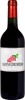
Weingut Schmidt 1753Spätburgunder Extra Trocken
 Red wine
In the mouth this red wine is a with a nice freshness.
This wine generally goes well with poultry, beef or veal.
Taste structure of the Spätburgunder Extra Trocken from the Weingut Schmidt 1753
Light | Bold | |
Smooth | Tannic | |
Dry | Sweet | |
Soft | Acidic |
In the mouth the Spätburgunder Extra Trocken of Weingut Schmidt 1753 in the region of Nahe is a with a nice freshness.
Food and wine pairings with Spätburgunder Extra Trocken
Pairings that work perfectly with Spätburgunder Extra Trocken



Original food and wine pairings with Spätburgunder Extra Trocken

The Spätburgunder Extra Trocken of Weingut Schmidt 1753 matches generally quite well with dishes of beef, veal or game (deer, venison) such as recipes of cicadas at the chib, oven-baked veal cutlets or duck legs confit.
Details and technical informations about Weingut Schmidt 1753's Spätburgunder Extra Trocken.
Discover the grape variety: Amigne
A very old vine cultivated in the Swiss Valais, more precisely in Vétroz. The latest genetic analyses, to be confirmed however, show that it would be related to the petit meslier and in fact to the gouais and the savagnin. It should be noted that it is only known in its country and region of origin.
Informations about the Weingut Schmidt 1753
The Weingut Schmidt 1753 is one of of the world's great estates. It offers 46 wines for sale in the of Nahe to come and discover on site or to buy online.

The wine region of Nahe
Nahe is one of the smaller German wine regions, named after the Nahe river which joins the Rhein at Rheinhessen/bingen">Bingen. The viticultural carea here is characterised by dramatic topography with steep slopes and craggy outcrops of metamorphic rock. Like most of the regions on or near the Rhine, its most prestigious wines are made from Riesling. There are around 4,000 hectares (10,000 acres) of Vineyards, spread across seven Grosslagen (wine districts) and over 300 Einzellagen (individual vineyard sites).
The word of the wine: Food and wine pairing
It is the set of techniques that allow for the pleasant combination of food and wine. Food and wine pairing is based on a few basic principles, such as similarity, complementarity or contrast, and involves all the elements that make up the wine and the food (flavours, textures, aromas, etc.).