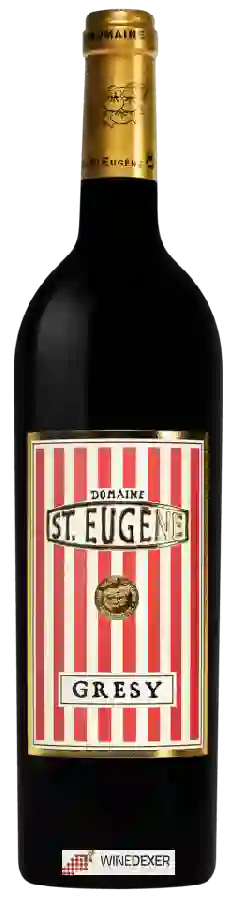
Domaine St.EugèneGresy
 Red wine


In the mouth this red wine is a powerful with a nice balance between acidity and tannins.
This wine generally goes well with beef, veal or pasta.

Taste structure of the Gresy from the Domaine St.Eugène
Light | Bold | |
Smooth | Tannic | |
Dry | Sweet | |
Soft | Acidic |
In the mouth the Gresy of Domaine St.Eugène in the region of Pays d'Oc is a powerful with a nice balance between acidity and tannins.
Food and wine pairings with Gresy
Pairings that work perfectly with Gresy



Original food and wine pairings with Gresy
The Gresy of Domaine St.Eugène matches generally quite well with dishes of beef, pasta or veal such as recipes of mexican beef tacos, pasta with avocado or chicken and sausage stew with carrots.
Details and technical informations about Domaine St.Eugène's Gresy.
Discover the grape variety: Big Muscat seedless
Table grape with long clusters of seedless golden berries, thin skin and crunchy flesh, with an intense muscat flavour. Very aromatic. Very rarely vinified. Grown in California, Australia and Chile for export markets, prized for its seductive muscat aroma, attractive appearance and long shelf life. American seedless muscat table grape, obtained by crossing for fresh consumption.
Last vintages of this wine
The best vintages of Gresy from Domaine St.Eugène are 2007
Informations about the Domaine St.Eugène
The Domaine St.Eugène is one of of the world's greatest estates. It offers 16 wines for sale in the of Pays d'Oc to come and discover on site or to buy online.

The wine region of Pays d'Oc
The single-grape IGP par excellence: modern, accessible, frank and fruity wines, the popular signature of the Midi. Spicy Syrah reds (pepper, blackberry), round Merlot, structured Cabernet, generous Grenache, supple Cinsault. Crisp, tangy rosés. Opulent Chardonnay whites, lively Sauvignon, floral, apricoty Viognier.
The word of the wine: Peduncle
The stem of a flower or fruit.