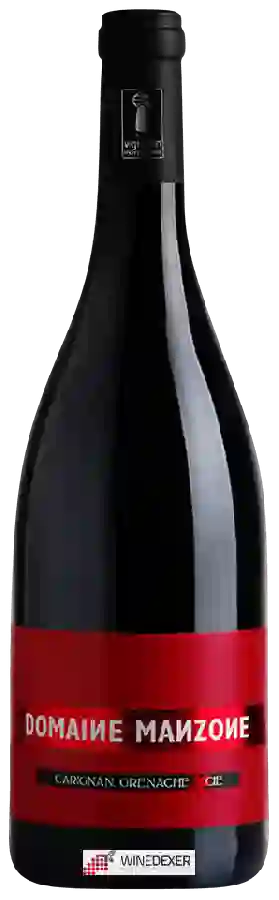
Domaine ManzoneCarignan - Grenache & Cie
 Red wine



In the mouth this red wine is a powerful with a nice balance between acidity and tannins.
This wine generally goes well with beef, game (deer, venison) or lamb.

Taste structure of the Carignan - Grenache & Cie from the Domaine Manzone
Light | Bold | |
Smooth | Tannic | |
Dry | Sweet | |
Soft | Acidic |
In the mouth the Carignan - Grenache & Cie of Domaine Manzone in the region of Rhone Valley is a powerful with a nice balance between acidity and tannins.
Food and wine pairings with Carignan - Grenache & Cie
Pairings that work perfectly with Carignan - Grenache & Cie



Original food and wine pairings with Carignan - Grenache & Cie
The Carignan - Grenache & Cie of Domaine Manzone matches generally quite well with dishes of beef, lamb or game (deer, venison) such as recipes of shepherd's pie (quebec!), semolina-merguez salad or rabbit with white wine.
Details and technical informations about Domaine Manzone's Carignan - Grenache & Cie.
Discover the grape variety: Tannat meunier
Deeply coloured and structured reds with a dense purple colour, firm and solid tannins, a powerful palate with preserved acidity, and signature aromas of black fruits (blackberry, blackcurrant), spices and garrigue notes. Rare profile, close to classic Tannat. A rare felty-leafed (meunier) variation of Tannat, now marginal, preserved in South-West varietal collections for its heritage value and studied for its genetic interest.
Last vintages of this wine
The best vintages of Carignan - Grenache & Cie from Domaine Manzone are 2015, 0
Informations about the Domaine Manzone
The Domaine Manzone is one of of the world's greatest estates. It offers 4 wines for sale in the of Rhone Valley to come and discover on site or to buy online.

The wine region of Rhone Valley
France's 2nd-largest AOC vineyard, two complementary worlds. Northern: pure Syrah in signature reds (Côte-Rôtie, Hermitage, Cornas), deep and peppery with blackberry, violet, black olive and smoked bacon notes, exceptional ageing. Opulent Viognier whites (Condrieu, apricot, flowers) and ample Marsanne-Roussanne. Southern: sun-soaked Grenache blends at Châteauneuf, Gigondas, Vacqueyras (candied fruit, garrigue).
The word of the wine: Bâtonnage
A very old technique that has come back into fashion in modern oenology, which consists of shaking the white wine in the barrels at the end of fermentation, or after fermentation, with a stick or a flail, in order to suspend the fine lees composed of yeasts at the end of their activity. This process is sometimes used for red wines.