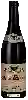
Domaine MadameSantenay
 Red wine
This wine generally goes well with poultry, beef or veal.
Food and wine pairings with Santenay
Pairings that work perfectly with Santenay



Original food and wine pairings with Santenay

The Santenay of Domaine Madame matches generally quite well with dishes of beef, veal or game (deer, venison) such as recipes of beef stew provencal style, veal simmered with vegetables or saddle of hare jura style.
Details and technical informations about Domaine Madame's Santenay.
Discover the grape variety: Sauvignac
Interspecific crossing obtained in Switzerland by Valentin Blattner between Riesling x Sauvignon Blanc and a variety whose name has not yet been communicated and which would be resistant to the main cryptogamic diseases. VB Cal 6-04 can be found in Switzerland, Belgium, Germany, etc. In France, a few plantations have been carried out and it is registered in the Official Catalogue of wine grape varieties under the name Sauvignac liste A.
Informations about the Domaine Madame
The Domaine Madame is one of wineries to follow in Côte de Beaune.. It offers 2 wines for sale in the of Côte de Beaune to come and discover on site or to buy online.

The wine region of Côte de Beaune
The Côte de Burgundy/cote-de-beaune/beaune">Beaune is a key wine region in Burgundy, eastern France. It owes its name to its main town, Beaune - the epicentre of local wine production and trade. Renowned for producing some of the world's most expensive white wines (most of which bear the name Montrachet in one form or another), the region also produces a handful of Burgundy's finest red wines, including those from the premier crus Pommard and grand cru Corton. As with most Burgundy wines, the white wines are made from Hardonnay">Chardonnay, the reds from Pinot Noir.
The wine region of Burgundy
Bourgogne is the catch-all regional appellation title of the Burgundy wine region in eastern France ("Bourgogne" is the French name for Burgundy). Burgundy has a Complex and comprehensive appellation system; counting Premier Cru and Grand Cru titles, the region has over 700 appellation titles for its wines. Thus, Burgundy wines often come from one Vineyard (or several separate vineyards) without an appellation title specific to the region, Village or even vineyard. A standard Burgundy wine may be made from grapes grown in one or more of Burgundy's 300 communes.
The word of the wine: Full
A full, complete and harmonious wine, offering a great wealth of flavours.