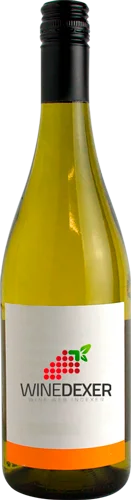
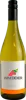
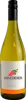
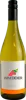
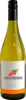
The Domaine Les Faunes of Genève

The Domaine Les Faunes is one of the world's great estates. It offers 22 wines for sale in of Genève to come and discover on site or to buy online.
Looking for the best Domaine Les Faunes wines in Genève among all the wines in the region? Check out our tops of the best red, white or effervescent Domaine Les Faunes wines. Also find some food and wine pairings that may be suitable with the wines from this area. Learn more about the region and the Domaine Les Faunes wines with technical and enological descriptions.
How Domaine Les Faunes wines pair with each other generally quite well with dishes of pork, rich fish (salmon, tuna etc) or vegetarian such as recipes of broccoli gratin, salt crusted sea bass or quiche without pastry.
In the mouth the white wine of Domaine Les Faunes. is a with a nice freshness.
Geneva, at the western end of Lac Léman (Lake Geneva), is the second-largest city in Switzerland and the country's third-largest wine producing canton after Valais and Vaud. Although not famously associated with wine, the city and its environs are home to numerous Vineyards and wineries, some within just a few miles of the Center.
At 1,400 hectares (3,500 acres), Geneva accounts for 10 percent of the country's vineyard area. Gamay is the predominant variety here, with the Swiss workhorse Chasselas (often labelled "Fendant") and Pinot Noir taking second and third place respectively.
Other popular regional grapes include the hardy, oft-blended combination of Gamaret and Garanoir as well as the more international Merlot and Chardonnay. The red-white split is 56 percent in favor of red.
The canton is home to numerous (around 95) small, generally family-run, wineries often with a large number of Varietal wines (albeit in small quantities). While many producers are clustered around the larger viticultural areas of Dardagny, Satigny, Peissy, and Soral, wineries are dotted around the city, some a stone's throw from the French border nearby.
The region also boasts 22 Premier Cru appellations, including Coteau de Bossy, Grand Carraz and Rougemont.
Broadly speaking, the vineyards around Geneva are separated into three officially named areas:
the Right Bank (790 hectares/1,900 acres), known as Mandement, encompassing the large Satigny and Dardagny zones as well as vineyards further northeast in Collex-Bossy and Céligny (towards the wider Vaud area on the "right bank" of the lake);
Entre Arve et Lac (283 hectares/699 acres), nominally on the Left Bank of the Rhône river and the lake, this encompasses the Southeastern quadrant of the canton (south of the lake and east of the Arve river that flows northwest into the Rhône, joining it in the city) out towards the French side of the lake; it forms a Rough triangle between the towns of Cologny, Anières and Jussy;
Entre Arve et Rhône (270 hectares/660 acres), on the western side of the city, including the areas of Lully, Veyrier, Soral and Laconnex
The region also counts just over 120 hectares (300 acres) of vineyard officially in France but worked by Genevan viticulturists for decades. These vineyards, in what is called the "zone franche" ("Open zone"), are appended to the Geneva appellation.
The Climate in Geneva is moderated significantly by the presence of the lake, which prevents summer temperatures from rising dramatically and slows the effects of frost and snow in winter.
How Domaine Les Faunes wines pair with each other generally quite well with dishes of beef, lamb or spicy food such as recipes of tournedos rossini, shoulder of lamb stuffed with cognac or pork gyros.
In the mouth the red wine of Domaine Les Faunes. is a with a nice balance between acidity and tannins.
Intraspecific crossing between Chasselas and Chardonnay, obtained in 1965 by Jean-Louis Simon and selected by André Jacquinet at the Agroscope Changins-Wädenswil research station (Switzerland). This grape variety is known and cultivated in Switzerland, but it can also be found in Hungary, Germany, Italy, etc., and is virtually unknown in France. With the same parents, Jean-Louis Simon also obtained the doral.
How Domaine Les Faunes wines pair with each other generally quite well with dishes of beef, veal or pork such as recipes of beef pot-au-feu, veal paupiettes with cider or potato and bacon omelette.
Said of wines from the last vintage and, by extension, wines of the year, fruity and easy-drinking, put on sale on the third Thursday in November. The AOC regulations specify that a wine is said to be primeur if it is bottled before the spring, and nouveau if it is bottled before the following harvest. Beaujolais Nouveau is therefore a vin primeur.
How Domaine Les Faunes wines pair with each other generally quite well with dishes of pork, rich fish (salmon, tuna etc) or vegetarian such as recipes of andouillette and baked potato gratin, parillade of fish and seafood or quiche with bacon and gruyère cheese.
Gamaret noir is a grape variety that originated in Switzerland. It produces a variety of grape specially used for the elaboration of wine. It is rare to find this grape to eat on our tables. This variety of vine is characterized by medium-sized bunches, and grapes of medium size. Gamaret noir can be found in many vineyards: South-West, Cognac, Bordeaux, Loire Valley, Burgundy, Jura, Champagne, Beaujolais, Provence & Corsica, Rhone Valley, Savoie & Bugey, Languedoc & Roussillon.
Planning a wine route in the of Genève? Here are the wineries to visit and the winemakers to meet during your trip in search of wines similar to Domaine Les Faunes.
The white Chardonnay is a grape variety that originated in France (Burgundy). It produces a variety of grape specially used for wine making. It is rare to find this grape to eat on our tables. This variety of grape is characterized by small bunches, and small grapes. White Chardonnay can be found in many vineyards: South West, Burgundy, Jura, Languedoc & Roussillon, Cognac, Bordeaux, Beaujolais, Savoie & Bugey, Loire Valley, Champagne, Rhone Valley, Armagnac, Lorraine, Alsace, Provence & Corsica.