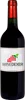
Domaine le ClaudChâteau de Caunelle l'Âme
 Red wine


In the mouth this red wine is a powerful with a nice balance between acidity and tannins.
This wine generally goes well with beef, veal or pasta.
Taste structure of the Château de Caunelle l'Âme from the Domaine le Claud
Light | Bold | |
Smooth | Tannic | |
Dry | Sweet | |
Soft | Acidic |
In the mouth the Château de Caunelle l'Âme of Domaine le Claud in the region of Languedoc-Roussillon is a powerful with a nice balance between acidity and tannins.
Food and wine pairings with Château de Caunelle l'Âme
Pairings that work perfectly with Château de Caunelle l'Âme



Original food and wine pairings with Château de Caunelle l'Âme
The Château de Caunelle l'Âme of Domaine le Claud matches generally quite well with dishes of beef, pasta or veal such as recipes of beef with cider, marco's pasta with bacon or veal blanquette à l'ancienne.
Details and technical informations about Domaine le Claud's Château de Caunelle l'Âme.
Discover the grape variety: Servanin
Servanin is native to the south of Savoie and the north of Isère. Its berries are short, oval and small to medium-sized. The bunches are full, cylindrical and small, some of them winged, and the bluish-black colour at the beginning turns to dark black when the grapes reach full maturity. Then, as time goes by, small green berries are gradually added to the vine. This curtain is completed by the light green of the medium-sized leaves.servanin is fertile and robust. Its only weak points are millerandage, citadels and mildew. It is less susceptible to grey rot. Although it buds early, it ripens rather late, in the second half of the year. This liqueur, which belongs to the Vin-de-Savoie, has a medium alcoholic and somewhat acidic taste. This wine is also called martelet, servagnin or serene. Unfortunately, it is noted that this variety has nowadays practically disappeared.
Informations about the Domaine le Claud
The Domaine le Claud is one of of the world's greatest estates. It offers 21 wines for sale in the of Saint-Georges d&rsquoOrques to come and discover on site or to buy online.

The wine region of Saint-Georges d&rsquoOrques
The wine region of Saint-Georges d&rsquoOrques is located in the region of Languedoc of Languedoc-Roussillon of France. Wineries and vineyards like the Château de l'Engarran or the Domaine de La Marfée produce mainly wines red, pink and white. The most planted grape varieties in the region of Saint-Georges d&rsquoOrques are Mourvèdre, Roussanne and Viognier, they are then used in wines in blends or as a single variety. On the nose of Saint-Georges d&rsquoOrques often reveals types of flavors of blackberry, red fruit or raisin and sometimes also flavors of citrus fruit, mint or strawberries.
The wine region of Languedoc-Roussillon
Languedoc (formerly Coteaux du Languedoc) is a key appellation used in the Languedoc-Roussillon wine region of southern France. It covers Dry table wines of all three colors (red, white and rosé) from the entire region, but leaves Sweet and Sparkling wines to other more specialized appellations. About 75% of all Languedoc wines are red, with the remaining 25% split roughly down the middle between whites and rosés. The appellation covers most of the Languedoc region and almost a third of all the vineyards in France.
The word of the wine: Cryo-extraction
This technique was very popular at the end of the 80's in Sauternes, a little less so now. The grapes are frozen before pressing, and the water transformed into ice remains in the marc, only the sugar flows out. As with the concentrators, the "cryo" can also increase bad taste and greenness.