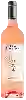
Domaine la LinquièreFleur de Lin Rosé
 Pink wine
This wine generally goes well with vegetarian, appetizers and snacks or lean fish.

Food and wine pairings with Fleur de Lin Rosé
Pairings that work perfectly with Fleur de Lin Rosé



Original food and wine pairings with Fleur de Lin Rosé


The Fleur de Lin Rosé of Domaine la Linquière matches generally quite well with dishes of pasta, vegetarian or appetizers and snacks such as recipes of pasta with tuna, vegan leek and tofu quiche or baked tortilla.
Details and technical informations about Domaine la Linquière's Fleur de Lin Rosé.
Discover the grape variety: Susumaniello
Structured, deeply coloured reds with a very dark ruby robe, firm tannins and a dense palate, with signature aromas of black fruits (blackberry, blackcurrant), black cherry, spices, garrigue and balsamic notes. Also vinified as a charming rosé. Marked quality revival in Salento and the province of Brindisi (Puglia) among modern winemakers. Italian autochthonous variety from Puglia, nearly extinct then recently rediscovered.
Informations about the Domaine la Linquière
The Domaine la Linquière is one of of the world's greatest estates. It offers 11 wines for sale in the of Saint-Chinian to come and discover on site or to buy online.

The wine region of Saint-Chinian
Languedoc cru between Beziers and Saint-Pons, signature dual terroir. Fleshy Mediterranean reds with notes of black fruit (blackberry, black cherry), garrigue, pepper, liquorice and spice, firm tannins and a sun-drenched palate. Northern schists: fruitier, smokier profile. Southern clay-limestone: more structured wines.
The wine region of Languedoc-Roussillon
Largest single French vineyard, dominated by sunny, generous reds. Spicy Syrah, candied Grenache (ripe fruit, garrigue), structured Carignan, deep Mourvèdre, supple Cinsault. Stars: structured Corbières, Minervois, Faugères, Saint-Chinian; round Côtes-du-Roussillon. Legendary vins doux naturels: Banyuls and Maury (fortified Grenache) with notes of cocoa, fig, prune.
The word of the wine: Marcottage
A vine reproduction technique that consists of burying a vine shoot that takes root and reproduces a plant with the same characteristics as the vine to which it is attached (synonym: provignage).