The Domaine du Paradis (FR) of Saint-Amour of Beaujolais
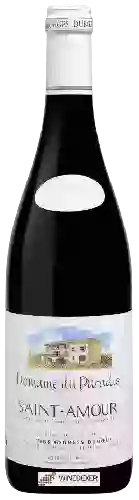
Domaine du Paradis (FR)
Only one wine is currently referenced in this domain
3.3


Note - 1Note - 1Note - 1Note - 0Note - 0
Its wines get an average rating of 3.3.
This estate is part of the Georges Duboeuf.
It is ranked in the top 17 of the estates of Beaujolais.
It is located in Saint-Amour in the region of Beaujolais

The Domaine du Paradis (FR) is one of the world's great estates. It offers 1 wines for sale in of Saint-Amour to come and discover on site or to buy online.

Top Domaine du Paradis (FR) wines

Looking for the best Domaine du Paradis (FR) wines in Saint-Amour among all the wines in the region? Check out our tops of the best red, white or effervescent Domaine du Paradis (FR) wines. Also find some food and wine pairings that may be suitable with the wines from this area. Learn more about the region and the Domaine du Paradis (FR) wines with technical and enological descriptions.

The top red wines of Domaine du Paradis (FR)

Food and wine pairings with a red wine of Domaine du Paradis (FR)

How Domaine du Paradis (FR) wines pair with each other generally quite well with dishes of pasta, veal or pork such as recipes of mami's macaroni and gruyere gratin, provencal veal tendrons or pasta "carbonara" à la française.

Organoleptic analysis of red wines of Domaine du Paradis (FR)

On the nose the red wine of Domaine du Paradis (FR). often reveals types of flavors of red fruit. In the mouth the red wine of Domaine du Paradis (FR). is a with a nice freshness.

The best vintages in the red wines of Domaine du Paradis (FR)

  • 2017With an average score of 3.70/5
  • 2015With an average score of 3.30/5
  • 2011With an average score of 3.30/5
  • 2014With an average score of 2.90/5

The grape varieties most used in the red wines of Domaine du Paradis (FR).

  • Gamay

Discovering the wine region of Saint-Amour

Saint-Amour is the Northernmost of the ten Beaujolais crus, located just South of the Mâcon appellations of Pouilly-Fuisse and Saint-Véran. Saint-Amour wines are among the lightest of the Beaujolais crus, often displaying Spicy berry and stone fruit characters with a marked minerality. Just under 800 acres (320 ha) are planted with the Gamay Grape variety on the south and east facing hillsides on the western banks of the Saône River, and make up the Saint-Amour appellation's wine growing area. While most of the ten Beaujolais crus were created in the 1930s, Saint-Amour was only officially delimited as a cru in February 1946.

Today, it is one of the smallest appellations in Beaujolais, larger than Chenas alone. In the northern Part of Beaujolais, the landscape is more rugged than in the south, and the clay and silt soils composed mainly of schist and granite are complemented by smaller amounts of limestone. These lightly textured soils are often credited with the minerality that characterizes the wines of Saint-Amour. The hills to the west of the Beaujolais protect the vineyards of Saint-Amour from the weather coming from the north.

Discover other wineries and winemakers neighboring the Domaine du Paradis (FR)

Planning a wine route in the of Saint-Amour? Here are the wineries to visit and the winemakers to meet during your trip in search of wines similar to Domaine du Paradis (FR).

Discover the grape variety: Muscat Ottonel

Muscat Ottonel has the character of a grape variety with a distant lineage. It was first obtained in 1839 and continues to be planted in nearly 2,000 hectares of vineyards around the world. It shows good vigour and promises satisfactory production, of the order of 6 kilos per vine. The bunches, which are rather loose, are quite large, bearing berries with a strong character. A pleasantly musky flavour and a lot of juice characterize the pulp, protected by a medium skin. The bluish-black skin contributes to the exceptional beauty of the vineyards at harvest time. The size of the ellipsoidal berries is another argument in favor of Muscat Ottonel, which is also known as Muscat Ottone or Muscadet Ottonel. Resin, toast, honey and wild flowers are all present in the wines made from this variety. If the foliage, which turns yellow in autumn, is one of its charms, remember to protect the fruit from grey rot and coulure.