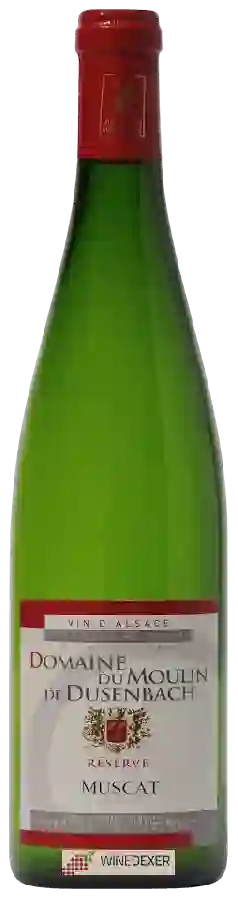
Domaine du Moulin de DusenbachRéserve Muscat
 White wine



This wine generally goes well with spicy food and sweet desserts.

Wine flavors and olphactive analysis

Food and wine pairings with Réserve Muscat
Pairings that work perfectly with Réserve Muscat


Original food and wine pairings with Réserve Muscat
The Réserve Muscat of Domaine du Moulin de Dusenbach matches generally quite well with dishes of spicy food or sweet desserts such as recipes of vegetarian paella or quick chocolate fudge cake.
Details and technical informations about Domaine du Moulin de Dusenbach's Réserve Muscat.
Discover the grape variety: Famoso
Aromatic, lively dry whites with a pale golden colour and a fragrant, fresh palate; intense muscat signature aromas, white flowers (acacia, orange blossom), exotic fruits (lychee, pineapple) and white-fleshed fruits. Expressive Romagnan profile. Enjoying a quality revival among modern Romagnan winemakers after near-extinction. Indigenous Italian white grape from Emilia-Romagna, grown in the province of Forlì.
Last vintages of this wine
The best vintages of Réserve Muscat from Domaine du Moulin de Dusenbach are 2015, 2014
Informations about the Domaine du Moulin de Dusenbach
The Domaine du Moulin de Dusenbach is one of of the world's great estates. It offers 52 wines for sale in the of Alsace to come and discover on site or to buy online.

The wine region of Alsace
Capital of great French aromatic whites, most often dry and single-varietal. Straight, mineral Riesling (lemon, gunflint), opulent, exuberant Gewurztraminer (lychee, rose, spices), round, smoky Pinot Gris, floral, crisp Muscat, supple Pinot Blanc. Fine, fruity Crémants d'Alsace, exceptional sweet Vendanges Tardives and Sélection de Grains Nobles. 15,500 ha at the foot of the Vosges on varied soils, 51 Grands Crus since 1975.
The word of the wine: Carbonic maceration
Fermentation of whole grapes in a carbon dioxide-saturated atmosphere. This type of fermentation produces very aromatic and flattering wines.