The Domaine des Grands Rocs of Brouilly of Beaujolais
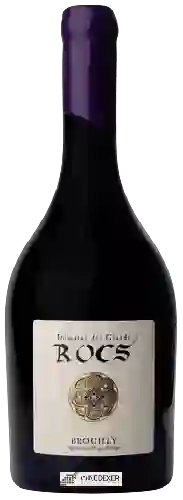
The Domaine des Grands Rocs is one of the world's great estates. It offers 4 wines for sale in of Brouilly to come and discover on site or to buy online.

Looking for the best Domaine des Grands Rocs wines in Brouilly among all the wines in the region? Check out our tops of the best red, white or effervescent Domaine des Grands Rocs wines. Also find some food and wine pairings that may be suitable with the wines from this area. Learn more about the region and the Domaine des Grands Rocs wines with technical and enological descriptions.
How Domaine des Grands Rocs wines pair with each other generally quite well with dishes of pasta, veal or pork such as recipes of tagliatelle with shrimps, dafina or homemade burger.
In the mouth the red wine of Domaine des Grands Rocs. is a with a nice freshness.
Brouilly is an appellation for red wines produced from Vineyards in north-central Beaujolais. The lower slopes of Mont Brouilly and the surrounding countryside contain large plantings of the Gamay Grape. The wines produced here are relatively robust and Full-bodied, in contrast to the light, fresh wines of Beaujolais Nouveau. The wines are fruitier than many of the other Beaujolais crus, with plum and berry flavors overpowering the traditional Floral">floralCharacter of Gamay.
The appellation was officially delimited along with most other Beaujolais crus in the 1930s. While the appellation applies only to red wines, the white varieties Chardonnay, Aligoté and Melon de Bourgogne can account for 15% of the vineyard area. They are also authorised as a minor component of the blend in Brouilly wines. The Brouilly wine area covers six communes around Mont Brouilly, none of which bears the name Brouilly, which is unusual for a Beaujolais cru.
Planning a wine route in the of Brouilly? Here are the wineries to visit and the winemakers to meet during your trip in search of wines similar to Domaine des Grands Rocs.
This is one of the most widely cultivated grape varieties in Greece, particularly in the regions of Attica, Euboea and Boeotia, and is virtually unknown in France. It is believed to be a cross between roditis and karystino, two varieties also of Greek origin.


