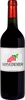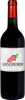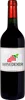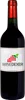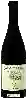
Domaine CirrusOrigines
 Red wine


In the mouth this red wine is a powerful with a nice balance between acidity and tannins.
This wine generally goes well with beef, veal or pasta.
Taste structure of the Origines from the Domaine Cirrus
Light | Bold | |
Smooth | Tannic | |
Dry | Sweet | |
Soft | Acidic |
In the mouth the Origines of Domaine Cirrus in the region of Languedoc-Roussillon is a powerful with a nice balance between acidity and tannins.
Food and wine pairings with Origines
Pairings that work perfectly with Origines



Original food and wine pairings with Origines
The Origines of Domaine Cirrus matches generally quite well with dishes of beef, pasta or veal such as recipes of baeckeoffe, pasta with crispy parma ham or cocotte chicken roulades.
Details and technical informations about Domaine Cirrus's Origines.
Discover the grape variety: Helios
An interspecific cross between Merzling and FR 986-60 (S.V. 12.481 x Müller-Thurgau) obtained in 1973 by Professor Zimmermann and selected by Norbert Becker at the Institute of Viticulture in Freiburg (Germany). Almost unknown in France, it can be found in Germany, Belgium, Luxembourg, etc.
Informations about the Domaine Cirrus
The Domaine Cirrus is one of of the world's greatest estates. It offers 5 wines for sale in the of Languedoc-Roussillon to come and discover on site or to buy online.

The wine region of Languedoc-Roussillon
Languedoc (formerly Coteaux du Languedoc) is a key appellation used in the Languedoc-Roussillon wine region of southern France. It covers Dry table wines of all three colors (red, white and rosé) from the entire region, but leaves Sweet and Sparkling wines to other more specialized appellations. About 75% of all Languedoc wines are red, with the remaining 25% split roughly down the middle between whites and rosés. The appellation covers most of the Languedoc region and almost a third of all the vineyards in France.
The word of the wine: Physiological maturity
The stage of ripeness of the grape berry when it has reached an optimal weight and when the sugar and acidity levels have stabilized.