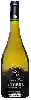
Domaine BizetDolium Sancerre
 White wine


In the mouth this white wine is a with a nice freshness.
This wine generally goes well with pork, vegetarian or shellfish.
Taste structure of the Dolium Sancerre from the Domaine Bizet
Light | Bold | |
Dry | Sweet | |
Soft | Acidic |
In the mouth the Dolium Sancerre of Domaine Bizet in the region of Loire Valley is a with a nice freshness.
Food and wine pairings with Dolium Sancerre
Pairings that work perfectly with Dolium Sancerre



Original food and wine pairings with Dolium Sancerre


The Dolium Sancerre of Domaine Bizet matches generally quite well with dishes of pork, shellfish or spicy food such as recipes of truffade (auvergne - cantal - 15), waterzooï of the sea or lamb tagine with prunes and almonds.
Details and technical informations about Domaine Bizet's Dolium Sancerre.
Discover the grape variety: Troyen
An old grape variety from the Aube and Yonne departments, it was also found in the Meuse, Vosges and Moselle. It is the result of a natural intraspecific crossing between pinot noir and gouais blanc. Today, the Troyen is practically no longer multiplied.
Informations about the Domaine Bizet
The Domaine Bizet is one of of the world's greatest estates. It offers 5 wines for sale in the of Sancerre to come and discover on site or to buy online.

The wine region of Sancerre
The wine region of Sancerre is located in the region of Haute Loire of Loire Valley of France. Wineries and vineyards like the Domaine Edmond Vatan or the Domaine Jean-Paul Balland produce mainly wines white, red and pink. The most planted grape varieties in the region of Sancerre are Pinot noir, Chenin blanc and Chardonnay, they are then used in wines in blends or as a single variety. On the nose of Sancerre often reveals types of flavors of pineapple, wood smoke or jasmine and sometimes also flavors of fennel, pink grapefruit or green bell pepper.
The wine region of Loire Valley
The Loire Valley is a key wine region in western France. It follows the course of the Loire River on its Long journey through the heart of France, from the inland hills of the Auvergne to the plains of the French Atlantic coast near Nantes (Muscadet country). Important in terms of quantity and quality, the region produces large quantities (about 4 million h/l each year) of everyday wines, as well as some of France's greatest wines. Diversity is another of the region's major assets; the styles of wine produced here range from the light, tangy Muscadet to the Sweet, honeyed Bonnezeaux, the Sparkling whites of Vouvray and the juicy, Tannic reds of Chinon and Saumur.
The word of the wine: Soft
Sweet wine containing between 30 and 50 grams of residual sugar. A sweet wine is made from very ripe grapes but without being affected by botrytis cinerea and without being raisined. This term can also be applied to a dry wine that is smooth and fat in the mouth.