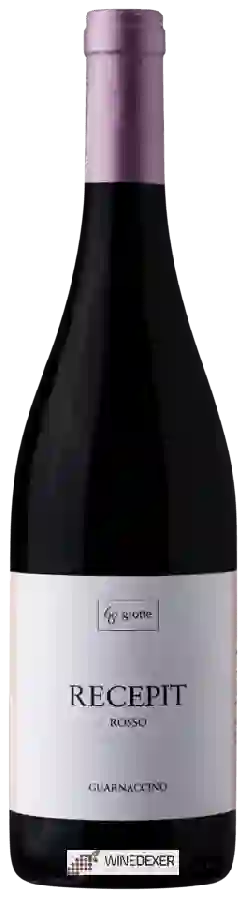
Winery 600 GrotteRecepit Rosso
 Red wine



In the mouth this red wine is a powerful.
This wine generally goes well with beef, lamb or pasta.

Taste structure of the Recepit Rosso from the Winery 600 Grotte
Light | Bold | |
Smooth | Tannic | |
Dry | Sweet | |
Soft | Acidic |
In the mouth the Recepit Rosso of Winery 600 Grotte in the region of Basilicata is a powerful.
Food and wine pairings with Recepit Rosso
Pairings that work perfectly with Recepit Rosso



Original food and wine pairings with Recepit Rosso
The Recepit Rosso of Winery 600 Grotte matches generally quite well with dishes of beef, pasta or lamb such as recipes of monkfish (anglerfish) à la sétoise, generous flaky quiche or thomas's shoulder of lamb.
Details and technical informations about Winery 600 Grotte's Recepit Rosso.
Discover the grape variety: Malbo Gentile
Supple, fruity reds with a moderate ruby robe, silky tannins and an airy palate, with signature aromas of red fruits (cherry, strawberry), soft spices and Emilian floral notes. Also made as a taut, refreshing frizzante. Grown mainly in the Modena and Reggio Emilia region, it is the signature of distinctive artisanal Emilian cuvées. Native Italian black grape from Emilia-Romagna.
Last vintages of this wine
The best vintages of Recepit Rosso from Winery 600 Grotte are 2015, 0, 2016, 2017
Informations about the Winery 600 Grotte
The Winery 600 Grotte is one of of the world's greatest estates. It offers 3 wines for sale in the of Basilicata to come and discover on site or to buy online.

The wine region of Basilicata
Austere region of southern Italy between Campania and Apulia, kingdom of volcanic Aglianico. Aglianico del Vulture signature DOCG on volcanic soils (~1,500 ha at 700 m): powerful, structured reds with signature notes of black cherry, blackberry, tobacco, leather, liquorice and a smoky mineral touch, firm tannins and long ageing — compared to Nebbiolo and Barolo. Also sun-drenched Primitivo, round Montepulciano. Fresh Greco and Fiano whites.
The word of the wine: Carpentry
A powerful red wine with a dense, rich body and a tight tannic structure.