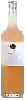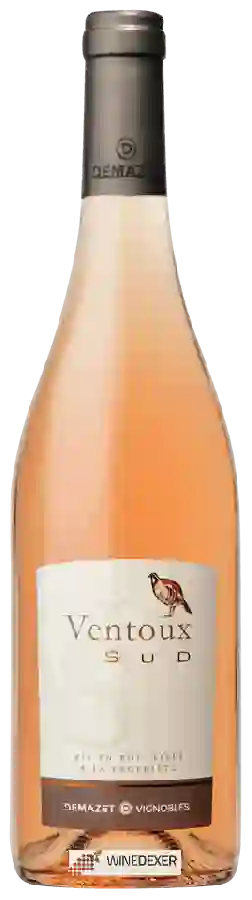
Winery DemazetSud Ventoux Rosé
 Pink wine
In the mouth this pink wine is a powerful.
This wine generally goes well with pork, poultry or rich fish (salmon, tuna etc).

Taste structure of the Sud Ventoux Rosé from the Winery Demazet
Light | Bold | |
Dry | Sweet | |
Soft | Acidic |
In the mouth the Sud Ventoux Rosé of Winery Demazet in the region of Vin de France is a powerful.
Food and wine pairings with Sud Ventoux Rosé
Pairings that work perfectly with Sud Ventoux Rosé



Original food and wine pairings with Sud Ventoux Rosé

The Sud Ventoux Rosé of Winery Demazet matches generally quite well with dishes of pork, rich fish (salmon, tuna etc) or shellfish such as recipes of leek, goat cheese and bacon quiche, tuna sandwich or soy and shrimp noodles.
Details and technical informations about Winery Demazet's Sud Ventoux Rosé.
Discover the grape variety: Viognier
Opulent, heady whites, rich and silky, with intense aromas of apricot, yellow peach, mango, violet, honeysuckle and musky, honeyed notes. Discreet acidity, creamy finish. Star of Condrieu AOC and Château-Grillet AOC, co-vinified in Côte-Rôtie with Syrah (up to 20%). Widely exported to California (Central Coast), Australia (Eden Valley) and Languedoc. A Rhône variety.
Informations about the Winery Demazet
The Winery Demazet is one of of the world's great estates. It offers 106 wines for sale in the of Vin de France to come and discover on site or to buy online.

The wine region of Vin de France
The freest category of French wine, the playground of winemakers working outside the AOC. All styles combined: fruity reds, lively or ambitious whites, everyday rosés, unusual blends, natural wines, atypical grapes (Petit Manseng in Languedoc, Riesling in Provence), experimental winemaking (skin-contact whites, no sulphur). Grape and vintage labelling allowed, no geographic constraint. From the pop, convivial cuvée to the artisan gem: freedom in a bottle.
The word of the wine: Oenology
The science of the oenologist, which is essentially concerned with the elaboration and maturation of wines.