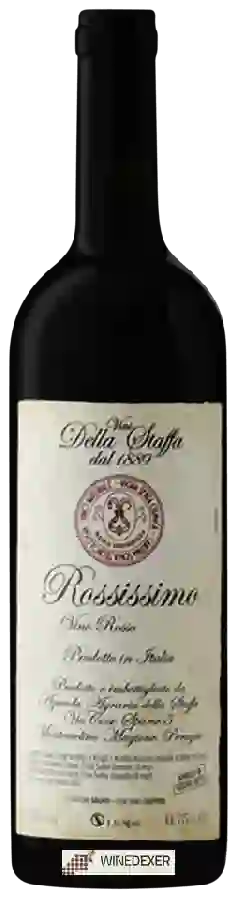
Winery Della StaffaRossissimo
 Red wine


In the mouth this red wine is a powerful with a lot of tannins present in the mouth.
This wine generally goes well with beef, game (deer, venison) or lamb.

Taste structure of the Rossissimo from the Winery Della Staffa
Light | Bold | |
Smooth | Tannic | |
Dry | Sweet | |
Soft | Acidic |
In the mouth the Rossissimo of Winery Della Staffa in the region of Trentino-Alto-Adige is a powerful with a lot of tannins present in the mouth.
Food and wine pairings with Rossissimo
Pairings that work perfectly with Rossissimo



Original food and wine pairings with Rossissimo

The Rossissimo of Winery Della Staffa matches generally quite well with dishes of beef, pasta or lamb such as recipes of chili con carne, pho ga (vietnamese chicken soup) or lamb tagine with peppers and artichoke bottoms.
Details and technical informations about Winery Della Staffa's Rossissimo.
Discover the grape variety: Moscatel Roxo
Intense, opulent fortified sweet wines with an amber colour and coppery highlights, a dense, unctuous palate, showing powerful muscat aromas (rose, fresh grape), exotic fruits (lychee, mango), candied citrus, honey and balsamic notes. Very long finish. Star of Moscatel de Setúbal Roxo, an emblematic fortified sweet wine of southern Portugal. Portuguese grey variety, an aromatic pink-skinned mutation of Muscat à Petits Grains.
Last vintages of this wine
The best vintages of Rossissimo from Winery Della Staffa are 2015, 0
Informations about the Winery Della Staffa
The Winery Della Staffa is one of of the world's great estates. It offers 38 wines for sale in the of Trentino-Alto-Adige to come and discover on site or to buy online.

The wine region of Trentino-Alto-Adige
Italy's northernmost alpine vineyard, two identities. Aromatic, precise whites are the stars: signature opulent Gewurztraminer (lychee, rose, spice), ample Pinot Grigio, mineral Pinot Bianco, lively high-altitude Muller-Thurgau. Native reds: dense fruity Teroldego (blackberry, violet), deep Lagrein with plum and chocolate notes, light crunchy Schiava, spicy Marzemino. Trento DOC Metodo Classico sparklers.
The word of the wine: Power
Character of a wine that is full-bodied, generous and has a rich bouquet.





