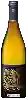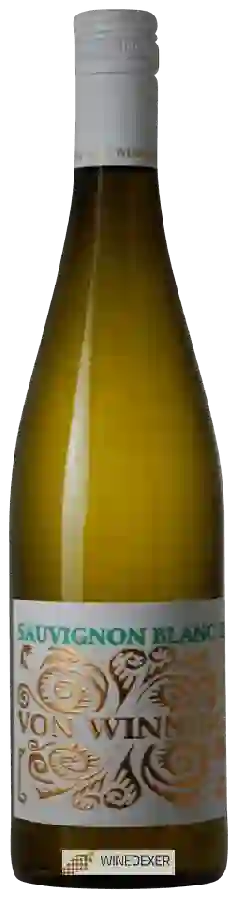
Winery Von WinningSauvignon Blanc II
 White wine


In the mouth this white wine is a with a nice freshness.
This wine generally goes well with vegetarian, shellfish or goat cheese.

Taste structure of the Sauvignon Blanc II from the Winery Von Winning
Light | Bold | |
Dry | Sweet | |
Soft | Acidic |
In the mouth the Sauvignon Blanc II of Winery Von Winning in the region of Pfalz is a with a nice freshness.
Wine flavors and olphactive analysis





On the nose the Sauvignon Blanc II of Winery Von Winning in the region of Pfalz often reveals types of flavors of pineapple, cream or grapefruit and sometimes also flavors of oaky, tropical or citrus.
Food and wine pairings with Sauvignon Blanc II
Pairings that work perfectly with Sauvignon Blanc II


Original food and wine pairings with Sauvignon Blanc II
The Sauvignon Blanc II of Winery Von Winning matches generally quite well with dishes of shellfish, vegetarian or goat cheese such as recipes of stuffed squid in the sétoise sauce, magic cake cheese quiche or quiche with leek fondue and goat cheese.
Details and technical informations about Winery Von Winning's Sauvignon Blanc II.
Discover the grape variety: Nobling
Fresh, fruity whites best drunk young, with a pale golden robe, an airy palate with moderate acidity, and signature aromas of white-fleshed fruits (apple, pear), white flowers, and slightly muscat-like notes. Accessible profile. Grown mainly in Baden-Württemberg for local dry whites and Markgräflerland blends. A white variety obtained in 1939 by Johannes Zimmermann in Freiburg (Silvaner × Chasselas).
Last vintages of this wine
The best vintages of Sauvignon Blanc II from Winery Von Winning are 2010, 2011, 2013, 2014 and 2012.
Informations about the Winery Von Winning
The Winery Von Winning is one of of the world's great estates. It offers 129 wines for sale in the of Pfalz to come and discover on site or to buy online.

The wine region of Pfalz
Fleshy, dry, fruity Riesling is the region's signature: yellow peach, apricot, ripe citrus, lovely mineral tension. Germany's largest red-wine area (40%), with silky Spätburgunder showing red fruit and spice, darker structured Dornfelder, supple Portugieser. Some rounded Pinot Blanc and Pinot Gris. A 23,640 ha vineyard along the Haardt, among Germany's warmest (>2,000 h of sun).
The word of the wine: Residual sugars
Sugars not transformed into alcohol and naturally present in the wine. The perception of residual sugars is conditioned by the acidity of the wine. The more acidic the wine is, the less sweet it will seem, given the same amount of sugar.