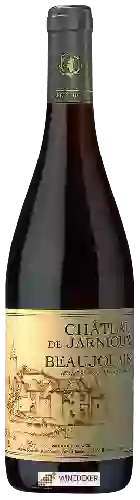
The Château de Jarnioux of Beaujolais

The Château de Jarnioux is one of the best wineries to follow in Beaujolais.. It offers 1 wines for sale in of Beaujolais to come and discover on site or to buy online.

Looking for the best Château de Jarnioux wines in Beaujolais among all the wines in the region? Check out our tops of the best red, white or effervescent Château de Jarnioux wines. Also find some food and wine pairings that may be suitable with the wines from this area. Learn more about the region and the Château de Jarnioux wines with technical and enological descriptions.
How Château de Jarnioux wines pair with each other generally quite well with dishes of pasta, veal or pork such as recipes of spaghetti with squid ink (italy), vitello tonnato or sauté of veal with olives (corsica).
On the nose the red wine of Château de Jarnioux. often reveals types of flavors of cherry, oaky or butter and sometimes also flavors of earthy, blackberry or minerality. In the mouth the red wine of Château de Jarnioux. is a with a nice freshness.
Kingdom of Gamay (98% of the vineyard): fruity, accessible reds with signature notes of cherry, raspberry, banana (carbonic maceration), violet and sweet spices, supple tannins and juicy acidity. From festive Beaujolais Nouveau (3rd Thursday of November) to the 10 more structured, age-worthy Crus: deep earthy Morgon, sturdy Moulin-à-Vent, floral Fleurie, crunchy Brouilly. Some lively Chardonnay. 12,000 ha south of Burgundy, granitic soils.
Immediate pleasure.
Planning a wine route in the of Beaujolais? Here are the wineries to visit and the winemakers to meet during your trip in search of wines similar to Château de Jarnioux.
Simple, fresh whites to drink young, with a pale golden colour, an airy palate with moderate acidity, and discreet signature aromas of citrus (lemon), white flowers and herbal notes. Accessible Lusitanian profile. Often blended with other local varieties, it contributes to the traditional white wines of Portuguese Estremadura and the Lisbon region. Portuguese white variety grown mainly in the Lisbon region and the north.