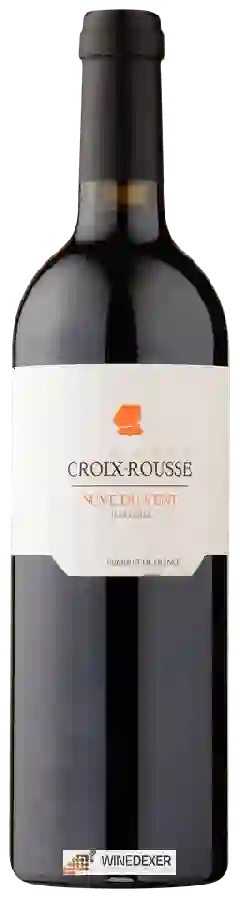
Winery Croix RousseSuvé du Vent Rouge
 Red wine


This wine generally goes well with beef, lamb or mature and hard cheese.

Food and wine pairings with Suvé du Vent Rouge
Pairings that work perfectly with Suvé du Vent Rouge



Original food and wine pairings with Suvé du Vent Rouge

The Suvé du Vent Rouge of Winery Croix Rousse matches generally quite well with dishes of beef, lamb or spicy food such as recipes of boeuf en daube, lamb chops with honey and spices or traditional lamb couscous (from algeria).
Details and technical informations about Winery Croix Rousse's Suvé du Vent Rouge.
Discover the grape variety: Mourvèdre
Powerful, deep reds with firm tannins and dense texture, showing aromas of blackberry, leather, garrigue, black pepper, liquorice and animal notes (game, forest floor) with age. Star of Bandol AOC as a single variety and pillar of Châteauneuf-du-Pape, Gigondas and Costières blends. Also in GSM in Languedoc and Australia. A late-ripening variety of Spanish origin (Mataró/Monastrell).
Last vintages of this wine

The best vintages of Suvé du Vent Rouge from Winery Croix Rousse are 2015, 2010, 2011, 2014 and 2013.
Informations about the Winery Croix Rousse
The Winery Croix Rousse is one of of the world's greatest estates. It offers 18 wines for sale in the of Corsica to come and discover on site or to buy online.

The wine region of Corsica
Mediterranean island wine region with a triple native face, ~8,000 ha. Niellucciu signature (cousin of Sangiovese) dominates Patrimonio: structured reds with signature notes of black cherry, garrigue, maquis, spices and leather, firm tannins and sun-drenched mouth. Sciaccarellu (min. 60% in Ajaccio) lighter and peppery (strawberry, wild herbs).
The word of the wine: Bacchus
Roman god of the vine and wine, often evoked to qualify everything that concerns the world of wine, and in particular its consumption. His name gave the adjective "bachique" which suggests the idea of celebration and conviviality.