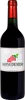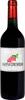
Winery Côté MasGrenache Noir
 Red wine


In the mouth this red wine is a powerful.
This wine generally goes well with poultry, beef or lamb.
Taste structure of the Grenache Noir from the Winery Côté Mas
Light | Bold | |
Smooth | Tannic | |
Dry | Sweet | |
Soft | Acidic |
In the mouth the Grenache Noir of Winery Côté Mas in the region of Pays d'Oc is a powerful.
Food and wine pairings with Grenache Noir
Pairings that work perfectly with Grenache Noir



Original food and wine pairings with Grenache Noir

The Grenache Noir of Winery Côté Mas matches generally quite well with dishes of beef, pasta or lamb such as recipes of provencal stew, lasagna with courgettes and fresh goat cheese or slippers with lamb.
Details and technical informations about Winery Côté Mas's Grenache Noir.
Discover the grape variety: Chenin blanc
It most certainly originates from the Anjou region and is registered in the official catalogue of wine grape varieties on the A1 list. It can also be found in South Africa, Australia, Argentina, Chile, the United States (California), New Zealand, etc. It is said to be a descendant of Savagnin and to have sauvignonasse as its second parent (Jean-Michel Boursiquot 2019). On the other hand, Chenin blanc is the half-brother of verdelho and sauvignon blanc and is the father of colombard.
Last vintages of this wine
The best vintages of Grenache Noir from Winery Côté Mas are 2014
Informations about the Winery Côté Mas
The Winery Côté Mas is one of of the world's great estates. It offers 27 wines for sale in the of Pays d'Oc to come and discover on site or to buy online.

The wine region of Pays d'Oc
Pays d'Oc is the PGI for red, white and rosé wines that are produced over a wide area of the southern coast of France. The PGI catchment area corresponds roughly to the Languedoc-roussillon">Languedoc-Roussillon wine region, one of the largest wine regions in France. The area covers all wines that are not produced under the strict laws that govern AOC-level appellations in the regions: among them, Corbières, Minervois and the Languedoc appellation itself. The Pays d'Oc PGI is arguably the most important in France, producing the majority of the country's PGI wines.
The word of the wine: Grand Cru
In Burgundy, the fourth and final level of classification (above the regional, communal and premier cru appellations), designating the wines produced on delimited plots of land (the climats) whose name alone constitutes the appellation. The climats classified as Grand Cru are 32 in the Côte d'Or plus one in Chablis which is divided into 7 distinct climats. Representing barely 1.5% of the production, the Grand Crus are the aristocracy of Burgundy wines.