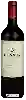
Winery ConwayReserve Cabernet Sauvignon
 wine
wine
This wine generally goes well with
The Reserve Cabernet Sauvignon of the Winery Conway is in the top 0 of wines of Happy Canyon of Santa Barbara.

Details and technical informations about Winery Conway's Reserve Cabernet Sauvignon.
Discover the grape variety: Villard blanc
Simple and lively dry whites with a pale golden colour, supple palate and preserved acidity, with understated aromas of white flowers, citrus (lemon) and hybrid notes. A productive, disease-resistant profile to drink young. Now marginal in France, it survives in a few heritage plots and varietal collections among the preserved Seyve-Villard hybrids. A French white hybrid obtained by Bertille Seyve in Bourgoin-Jallieu (Seyve-Villard 12-375).
Informations about the Winery Conway
The Winery Conway is one of of the world's greatest estates. It offers 10 wines for sale in the of Happy Canyon of Santa Barbara to come and discover on site or to buy online.

The wine region of Happy Canyon of Santa Barbara
Warmest sub-zone of Santa Ynez Valley (AVA 2009, 400 acres) east of Santa Barbara: signature Bordeaux varieties — Cabernet Sauvignon, Cabernet Franc, Merlot, Malbec and Petit Verdot in rich ripe reds, emblematic tense Sauvignon Blanc. Sand, gravel and clay soils with rare serpentinite, low yields concentrating aromas. Flavor preceding sugar at ripening: signature depth, ripe fruits, firm tannins and lively acidity.
The wine region of California
Powerful, sunny reds: dense Napa Cabernet Sauvignon (blackcurrant, chocolate, tobacco, ample tannins), spicy, jammy Zinfandel from the Sierra Foothills, silky red-fruited Pinot Noir on the cool coast (Sonoma, Russian River, Central Coast). Opulent, buttery Chardonnay, notes of yellow fruit and vanilla. Varied climate, from the hot interior to the Pacific-cooled coast. 80% of US production, 139 AVAs including Napa (1st AVA, 1981).
The word of the wine: Tiled
Said of the colour of an evolved wine that has taken on brick and orange hues.