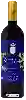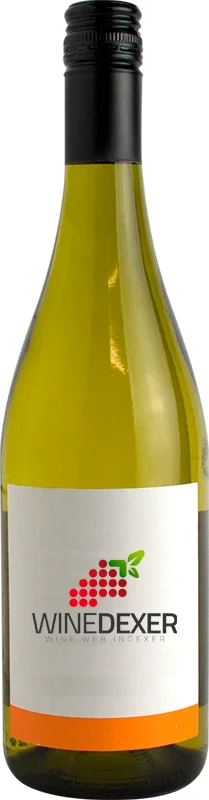
Winery Conde de VillasenorMarqués de Cadai Blanco
 White wine


In the mouth this white wine is a powerful.
This wine generally goes well with appetizers and snacks, lean fish or shellfish.
Taste structure of the Marqués de Cadai Blanco from the Winery Conde de Villasenor
Light | Bold | |
Dry | Sweet | |
Soft | Acidic |
In the mouth the Marqués de Cadai Blanco of Winery Conde de Villasenor in the region of Rioja is a powerful.
Food and wine pairings with Marqués de Cadai Blanco
Pairings that work perfectly with Marqués de Cadai Blanco



Original food and wine pairings with Marqués de Cadai Blanco

The Marqués de Cadai Blanco of Winery Conde de Villasenor matches generally quite well with dishes of shellfish, appetizers and snacks or lean fish such as recipes of mussels with camembert cheese, snowman in pudding or monkfish matelote.
Details and technical informations about Winery Conde de Villasenor's Marqués de Cadai Blanco.
Discover the grape variety: Esther
Interspecific crossing between the white Villard (Seyve-Villard 12375) and the magarcsi csemege obtained in 1969 in Hungary by Sandor Szegedi. This hybrid, most often used as a table grape, has been little multiplied and is still of great interest to amateur gardeners. It can be found in Hungary, Germany, Austria, Switzerland, Slovenia, ... completely unknown in France.
Last vintages of this wine
The best vintages of Marqués de Cadai Blanco from Winery Conde de Villasenor are 0
Informations about the Winery Conde de Villasenor
The Winery Conde de Villasenor is one of of the world's greatest estates. It offers 6 wines for sale in the of Rioja to come and discover on site or to buy online.

The wine region of Rioja
Rioja, in northern Spain, is best known for its berry-flavored, barrel-aged red wines made from Tempranillo and Garnacha. It is probably the leading wine region in Spain. It is certainly the most famous, rivaling only Jerez. The Vineyards follow the course of the Ebro for a hundred kilometres between the towns of Haro and Alfaro.
The word of the wine: Noble rot
A fungus called botrytis cinerea that develops during the over-ripening phase, an ally of great sweet white wines, when it concentrates the juice of the berries. It requires the humidity of morning fogs and beautiful sunny days, gives musts very rich in sugar and brings to the wines the famous taste of "roasted".