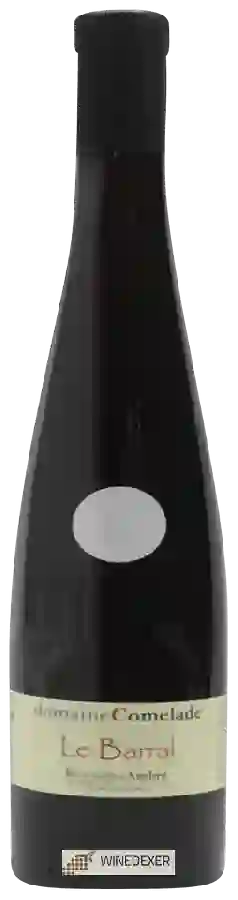
Domaine ComeladeLe Barral Rivesaltes Ambré
 Sweet wine


This wine generally goes well with

Wine flavors and olphactive analysis




On the nose the Le Barral Rivesaltes Ambré of Domaine Comelade in the region of Languedoc-Roussillon often reveals types of flavors of vanilla, caramel or fig and sometimes also flavors of honey, non oak or earth.
Details and technical informations about Domaine Comelade's Le Barral Rivesaltes Ambré.
Discover the grape variety: Fuëlla nera
Light, elegant reds with a clear ruby colour, fine, silky tannins and an airy palate with fresh acidity, signature aromas of red fruits (cherry, raspberry), spices (pepper), garrigue and Mediterranean notes. Airy profile. Star of the AOC Bellet appellation, a typical expression of the Nice terroir, it defines the viticultural identity of the French Riviera. Indigenous French black variety from the Alpes-Maritimes (Folle Noire), grown almost exclusively at Bellet.
Last vintages of this wine
The best vintages of Le Barral Rivesaltes Ambré from Domaine Comelade are 1987
Informations about the Domaine Comelade
The Domaine Comelade is one of of the world's greatest estates. It offers 19 wines for sale in the of Rivesaltes to come and discover on site or to buy online.

The wine region of Rivesaltes
Great Roussillon appellation for Vins Doux Naturels, ~5,200 ha across Pyrénées-Orientales and Aude. Mutage with neutral spirit halts fermentation. 4 signature styles: Grenat on black Grenache with intense notes of candied cherry, kirsch and cocoa; oxidative Tuilé with prune, coffee, walnut and caramel; Ambré (white Grenache) with honey, candied orange, dried fruits; fruity Rosé strawberry. Exceptional ageing (10-50 years).
The wine region of Languedoc-Roussillon
Largest single French vineyard, dominated by sunny, generous reds. Spicy Syrah, candied Grenache (ripe fruit, garrigue), structured Carignan, deep Mourvèdre, supple Cinsault. Stars: structured Corbières, Minervois, Faugères, Saint-Chinian; round Côtes-du-Roussillon. Legendary vins doux naturels: Banyuls and Maury (fortified Grenache) with notes of cocoa, fig, prune.
The word of the wine: Overmaturation
When the grapes reach maturity, the skin becomes permeable and progressively loses water, which causes a concentration phenomenon inside the berry. This is called over-ripening or passerillage.