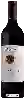
Winery College CellarsLa Laurelia Seven Hills Vineyard Red
 Red wine
This wine generally goes well with pork, poultry or beef.

Wine flavors and olphactive analysis

Food and wine pairings with La Laurelia Seven Hills Vineyard Red
Pairings that work perfectly with La Laurelia Seven Hills Vineyard Red



Original food and wine pairings with La Laurelia Seven Hills Vineyard Red



The La Laurelia Seven Hills Vineyard Red of Winery College Cellars matches generally quite well with dishes of beef, veal or pork such as recipes of beef kidney, tournedos rossini with port sauce or macaroonade from sète.
Details and technical informations about Winery College Cellars's La Laurelia Seven Hills Vineyard Red.
Discover the grape variety: Sangiovese
Firm, upright reds with precise acidity and angular tannins, showing aromas of sour cherry, plum, dried herbs, leather, black tea and balsamic notes. Characteristically bitter, savoury finish. Star of Chianti Classico DOCG, Brunello di Montalcino DOCG, Vino Nobile di Montepulciano DOCG and Morellino di Scansano. Italy's most planted variety, a descendant of Ciliegiolo × Calabrese di Montenuovo.
Informations about the Winery College Cellars
The Winery College Cellars is one of of the world's greatest estates. It offers 42 wines for sale in the of Walla Walla Valley to come and discover on site or to buy online.

The wine region of Walla Walla Valley
Star of the American north-west straddling Washington and Oregon: signature Cabernet Sauvignon reigns in reds — structured and concentrated with notes of blackcurrant, blackberry, cedar, tobacco and a touch of spice, firm tannins, great ageing potential. Racy, complex Syrah (blackberry, black olive, pepper, smoked meat), supple Merlot, Cabernet Franc and Sangiovese complement. Long season (200 days), hot days and cool nights, loess soils. AVA (1984) within the Columbia Valley.
The wine region of Washington
2nd US producer by volume, on the arid, sunny Columbia Valley. Star Cabernet Sauvignon (~60% of reds): powerful and structured with signature notes of blackcurrant, blackberry, cedar, dry herbs and graphite, firm tannins. Fleshy, peppery Syrah (black fruits, smoked meat). Round, fruity Merlot, historic mineral Riesling (dry and off-dry), precise Chardonnay and ample Sémillon.
The word of the wine: Overmaturation
When the grapes reach maturity, the skin becomes permeable and progressively loses water, which causes a concentration phenomenon inside the berry. This is called over-ripening or passerillage.