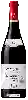
Winery Claude ThéodoreBeaujolais
 Red wine


In the mouth this red wine is a with a nice freshness.
This wine generally goes well with pork, poultry or veal.
Taste structure of the Beaujolais from the Winery Claude Théodore
Light | Bold | |
Smooth | Tannic | |
Dry | Sweet | |
Soft | Acidic |
In the mouth the Beaujolais of Winery Claude Théodore in the region of Beaujolais is a with a nice freshness.
Food and wine pairings with Beaujolais
Pairings that work perfectly with Beaujolais



Original food and wine pairings with Beaujolais

The Beaujolais of Winery Claude Théodore matches generally quite well with dishes of pasta, veal or pork such as recipes of pasta gratin carbonara style, very soft beef bourguignon or chicken pie.
Details and technical informations about Winery Claude Théodore's Beaujolais.
Discover the grape variety: Merlese
Intraspecific crossing between sangiovese or nielluccio and merlot noir obtained in 1983 by the University of Bologna (Italy), registered since 2007 in the Italian Official Register of wine grape varieties... totally unknown in France.
Last vintages of this wine
The best vintages of Beaujolais from Winery Claude Théodore are 0
Informations about the Winery Claude Théodore
The Winery Claude Théodore is one of of the world's greatest estates. It offers 8 wines for sale in the of Beaujolais to come and discover on site or to buy online.

The wine region of Beaujolais
Beaujolais is an important wine region in eastern France, famous for its vibrant, Fruity red wines made from Gamay. It is located immediately South of Burgundy, of which it is sometimes considered a Part, although it is in the administrative region of Rhône. The extensive plantings of Gamay in this region make Beaujolais one of the few regions in the world that is so concentrated on a single Grape variety. Pinot Noir is used in small quantities in red and rosé wines, but in the name of regional identity, it is being phased out and will only be allowed until the 2015 harvest.
The word of the wine: Water stress
Lack of water. Water stress blocks the vegetative cycle of the vine, which uses all available resources to maintain the integrity of the plant, thus blocking the ripening process of the grapes.