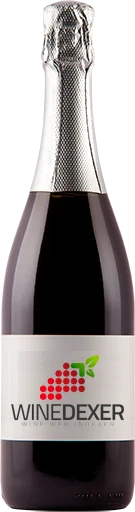
Winery Claude ChonionCrémant de Bourgogne Brut
 Sparkling wine
This wine generally goes well with poultry, appetizers and snacks or lean fish.
Food and wine pairings with Crémant de Bourgogne Brut
Pairings that work perfectly with Crémant de Bourgogne Brut



Original food and wine pairings with Crémant de Bourgogne Brut


The Crémant de Bourgogne Brut of Winery Claude Chonion matches generally quite well with dishes of shellfish, poultry or appetizers and snacks such as recipes of shrimp with oyster sauce, chicken in sauce or macaroons foie gras / figs.
Details and technical informations about Winery Claude Chonion's Crémant de Bourgogne Brut.
Discover the grape variety: Perlaut
A cross between Cinsaut and Csaba pearl obtained in 1956, registered in the Official Catalogue of Table Grape Varieties, list A1.
Informations about the Winery Claude Chonion
The Winery Claude Chonion is one of of the world's great estates. It offers 51 wines for sale in the of Crémant de Bourgogne to come and discover on site or to buy online.

The wine region of Crémant de Bourgogne
Recognized in 1975, the appellation crémant-de-bourgogne replaced the Sparkling wines whose quality was not very homogeneous. Its geographical area, very vast, covers more than 300 communes, of Châtillonnais, with the borders of Champagne auboise, with Beaujolais included. The AOC imposes conditions of harvest and elaboration as strict as those of the Champagne region and copied on this one, the difference residing in the duration of Maturation on lees, which is of nine months minimum, against twelve for the champagne. The Grape varieties used also bring Crémant-de-Bourgogne closer to its illustrious Champagne model, for although all the varieties of the region can be used, Pinot Noir and Chardonnay are favoured.
The wine region of Burgundy
Bourgogne is the catch-all regional appellation title of the Burgundy wine region in eastern France ("Bourgogne" is the French name for Burgundy). Burgundy has a Complex and comprehensive appellation system; counting Premier Cru and Grand Cru titles, the region has over 700 appellation titles for its wines. Thus, Burgundy wines often come from one Vineyard (or several separate vineyards) without an appellation title specific to the region, Village or even vineyard. A standard Burgundy wine may be made from grapes grown in one or more of Burgundy's 300 communes.
The word of the wine: Maceration
Prolonged contact and exchange between the juice and the grape solids, especially the skin. Not to be confused with the time of fermentation, which follows maceration. The juice becomes loaded with colouring matter and tannins, and acquires aromas. For a rosé, the maceration is short so that the colour does not "rise" too much. For white wines too, a "pellicular maceration" can be practised, which allows the wine to acquire more fat.