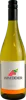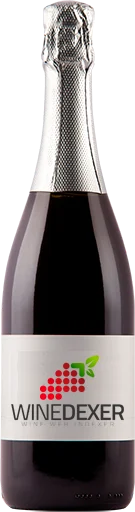
Christophe Croisard - Domaine de la RaderieLes Bulles de la Raderie Rosé Demi-Sec
 Sparkling wine
This wine generally goes well with
Details and technical informations about Christophe Croisard - Domaine de la Raderie's Les Bulles de la Raderie Rosé Demi-Sec.
Discover the grape variety: Golden muscat
Interspecific cross between Hamburg Muscat and Diamond (concord x iona) obtained in 1927 by R.D. Anthony at the Cornell University experimental station in Geneva (USA).
Informations about the Christophe Croisard - Domaine de la Raderie
The Christophe Croisard - Domaine de la Raderie is one of of the world's greatest estates. It offers 16 wines for sale in the of Coteaux du Loir to come and discover on site or to buy online.

The wine region of Coteaux du Loir
Coteaux du Loir blanc is a still white wine produced in the vineyards of the Loire, in the west of France and more precisely in the wine region of Touraine. Administratively, Coteaux du Loir blanc can be produced in the dePartments of Sarthe and Indre-et-Loire. Its Terroir benefits from a temperate Climate with an oceanic influence and degraded oceanic soils of chalk tuffeau, clay-limestone and flinty clay. The "Chenin B" grape variety is the only one that can be used to make white Coteaux du Loir wine.
The wine region of Loire Valley
The Loire Valley is a key wine region in western France. It follows the course of the Loire River on its Long journey through the heart of France, from the inland hills of the Auvergne to the plains of the French Atlantic coast near Nantes (Muscadet country). Important in terms of quantity and quality, the region produces large quantities (about 4 million h/l each year) of everyday wines, as well as some of France's greatest wines. Diversity is another of the region's major assets; the styles of wine produced here range from the light, tangy Muscadet to the Sweet, honeyed Bonnezeaux, the Sparkling whites of Vouvray and the juicy, Tannic reds of Chinon and Saumur.
The word of the wine: Presses
The juice that results from pressing the grapes after fermentation. At the end of the maceration, the vats are emptied, the first juice obtained is called the free-run wine and the marc remaining at the bottom of the vat is then pressed to give the press wine. We say more quickly "the presses". Their quality varies according to the vintage and the maceration. A too vigorous extraction releases the tannins of pips and the wine of press can then prove to be very astringent. Often the winemaker raises it separately, deciding later whether or not to incorporate it totally or partially into the grand vin.