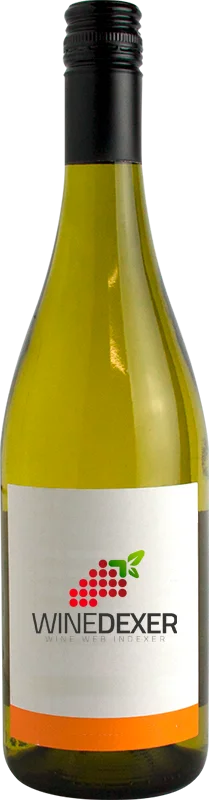
Winery Cheval QuancardBochumer Wittspon Bordeaux
 White wine
In the mouth this white wine is a powerful.
This wine generally goes well with pork, vegetarian or poultry.
Taste structure of the Bochumer Wittspon Bordeaux from the Winery Cheval Quancard
Light | Bold | |
Dry | Sweet | |
Soft | Acidic |
In the mouth the Bochumer Wittspon Bordeaux of Winery Cheval Quancard in the region of Bordeaux is a powerful.
Food and wine pairings with Bochumer Wittspon Bordeaux
Pairings that work perfectly with Bochumer Wittspon Bordeaux



Original food and wine pairings with Bochumer Wittspon Bordeaux


The Bochumer Wittspon Bordeaux of Winery Cheval Quancard matches generally quite well with dishes of pork, vegetarian or poultry such as recipes of salty crumble with courgettes, goat cheese and bacon, zucchini quiche or fried rice noodles with chicken.
Details and technical informations about Winery Cheval Quancard's Bochumer Wittspon Bordeaux.
Discover the grape variety: Sauvignon-Rytos
An interspecific cross between Sauvignon Blanc and Bianca obtained in Italy and in 2002 by the University of Udine and the Institute of Applied Genetics. It should not be confused with the sauvignon-kretos. It can be found in Germany, Poland, ... in France it is almost unknown.
Informations about the Winery Cheval Quancard
The Winery Cheval Quancard is one of wineries to follow in Bordeaux.. It offers 185 wines for sale in the of Bordeaux to come and discover on site or to buy online.

The wine region of Bordeaux
Bordeaux, in southwestern France, is one of the most famous, prestigious and prolific wine regions in the world. The majority of Bordeaux wines (nearly 90% of the production Volume) are the Dry, medium and Full-bodied red Bordeaux blends for which it is famous. The finest (and most expensive) are the wines of the great châteaux of Haut-Médoc and the right bank appellations of Saint-Émilion and Pomerol. The former focuses (at the highest level) on Cabernet Sauvignon, the latter on Merlot.
The word of the wine: Reassembly
During the vinification process, a "cap" is formed at the top of the vats with the solid parts (skin, pulp, pips, etc.), which contain tannins and colouring elements. Pumping over consists of emptying the vat from the bottom and pouring the juice back to the top, in order to mix the cap and the juice and to favour the exchange and the extraction. This old technique allows a better exchange between the solid parts and the liquid.