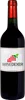
The Château Haut-Liloie of Bordeaux Supérieur of Bordeaux

The Château Haut-Liloie is one of the best wineries to follow in Bordeaux Supérieur.. It offers 2 wines for sale in of Bordeaux Supérieur to come and discover on site or to buy online.
Looking for the best Château Haut-Liloie wines in Bordeaux Supérieur among all the wines in the region? Check out our tops of the best red, white or effervescent Château Haut-Liloie wines. Also find some food and wine pairings that may be suitable with the wines from this area. Learn more about the region and the Château Haut-Liloie wines with technical and enological descriptions.
How Château Haut-Liloie wines pair with each other generally quite well with dishes of beef, veal or game (deer, venison) such as recipes of borscht (russia), osso bucco milanese or blanquette of rabbit with riesling and chanterelles.
In the mouth the red wine of Château Haut-Liloie. is a powerful with a nice balance between acidity and tannins.
Bordeaux Supérieur is an appellation level applied to wines produced in the Generic area of the Bordeaux PDO. They are produced from the classic Bordeaux Grape varieties. The reds are, as the name suggests, intended to be a slightly "superior" form of the standard Bordeaux AOC wines. They are therefore heavily based on Merlot and Cabernet Sauvignon, with smaller amounts of Cabernet Franc, Petit Verdot and Malbec.
Some wines may feature the "lost child" of Bordeaux, Carménère. Small quantities of white wine are produced. However, as the wines must be Sweet, this does not represent a level of quality as is the case for the red designation. These wines are generally made from Sauvignon Blanc and Semillon.
Some blends may include Muscadelle, Ugni Blanc and Merlot Blanc. Similarly, the Graves Supérieures appellation is specific to sweet white wines. Only two French wine regions have adopted the concept of having a "superior" level for their appellations. The other is Beaujolais.
Planning a wine route in the of Bordeaux Supérieur? Here are the wineries to visit and the winemakers to meet during your trip in search of wines similar to Château Haut-Liloie.
Discovered in the 1870s by Mr. Robin, who lived in the Drôme at the time in Lapeyrouse-Mornay, this ancient grape variety is believed to have originated in the north of Isère. It can also be found in Switzerland. According to Thierry Lacombe (I.N.R.A./Montpellier), it is the result of a natural intraspecific crossing between Tressot Noir and Mondeuse Blanche. It should be noted in passing that, on the one hand, it has exactly the same parents as the mondeuse noire, that on the other hand, it is the mother of the diolinoir and, finally, is related to the servanin. Robin noir is not widely propagated today because it is not well known, although it is listed in the Official Catalogue of Wine Grape Varieties, list A1.