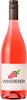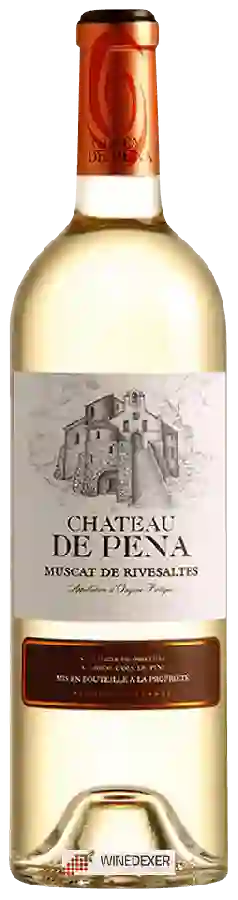
Château de PénaMuscat de Rivesaltes
 Natural sweet wine


This wine generally goes well with spicy food and sweet desserts.

Food and wine pairings with Muscat de Rivesaltes
Pairings that work perfectly with Muscat de Rivesaltes


Original food and wine pairings with Muscat de Rivesaltes
The Muscat de Rivesaltes of Château de Péna matches generally quite well with dishes of spicy food or sweet desserts such as recipes of chili con carne or king's cake with frangipane.
Details and technical informations about Château de Péna's Muscat de Rivesaltes.
Discover the grape variety: Muskat Oliver
Fine aromatic whites with a pale golden colour, supple palate with fresh acidity, signature muscat aromas (rose, fresh grape), peach, white flowers and delicate spiced notes. Early ripening. Grown in Hungary, Slovakia and the Czech Republic for characterful aromatic white wines of Central Europe. Synonym of the Hungarian Irsai Oliver, aromatic white variety bred in 1930 by Pál Kocsis (Pozsonyi Fehér × Pearl of Csaba).
Last vintages of this wine
The best vintages of Muscat de Rivesaltes from Château de Péna are 2011
Informations about the Château de Péna
The Château de Péna is one of of the world's greatest estates. It offers 38 wines for sale in the of Muscat de Rivesaltes to come and discover on site or to buy online.

The wine region of Muscat de Rivesaltes
Star AOC of Roussillon's Vins Doux Naturels: Muscat a Petits Grains and Muscat of Alexandria as signatures in equal parts in sweet whites — pale gold robe with green or pinkish glints, dazzling signature aromas of peach, lemon, mango, fresh grape, rose and mint, unctuous palate preserved by mutage with alcohol. Amber evolution with age toward honey, candied apricot and spices. AOC, ~4,400 ha across 99 communes, varied soils (granite, schist, limestone), Mediterranean and Muscat de Noel.
The wine region of Languedoc-Roussillon
Largest single French vineyard, dominated by sunny, generous reds. Spicy Syrah, candied Grenache (ripe fruit, garrigue), structured Carignan, deep Mourvèdre, supple Cinsault. Stars: structured Corbières, Minervois, Faugères, Saint-Chinian; round Côtes-du-Roussillon. Legendary vins doux naturels: Banyuls and Maury (fortified Grenache) with notes of cocoa, fig, prune.
The word of the wine: Oenology
The science of the oenologist, which is essentially concerned with the elaboration and maturation of wines.