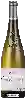
Château de PassavantPenser Nature Le Sauvignon
 White wine



In the mouth this white wine is a .
This wine generally goes well with

Taste structure of the Penser Nature Le Sauvignon from the Château de Passavant
Light | Bold | |
Dry | Sweet | |
Soft | Acidic |
In the mouth the Penser Nature Le Sauvignon of Château de Passavant in the region of Loire Valley is a .
Details and technical informations about Château de Passavant's Penser Nature Le Sauvignon.
Discover the grape variety: Sauvignon
Rich, aromatic whites with a fuller mouth than Sauvignon Blanc and softer acidity, featuring aromas of yellow peach, melon, passion fruit, ripe citrus and delicate spicy notes. A grey-skinned mutation of Sauvignon Blanc, made as a rare single variety in Bordeaux (Pessac-Léognan, Graves), the Loire and Chile where it is experiencing a fine qualitative revival. Adds roundness to dry Bordeaux blends. French grape.
Last vintages of this wine
The best vintages of Penser Nature Le Sauvignon from Château de Passavant are 0
Informations about the Château de Passavant
The Château de Passavant is one of of the world's great estates. It offers 23 wines for sale in the of Anjou to come and discover on site or to buy online.

The wine region of Anjou
Loire mosaic between schist (black Anjou) and tuffeau (white Anjou): signature Chenin as the white king (≥80%) — dry to sweet with notes of citrus, apple, pear, quince, mirabelle, honey and a mineral touch, racy natural acidity and great ageing on the best. Cabernet Franc in fruity, supple reds (strawberry, cherry, raspberry, violet) and in indulgent off-dry rosés. Grolleau and Pineau d'Aunis as support. AOC of Maine-et-Loire, mild oceanic climate, moderate yields.
The wine region of Loire Valley
Kingdom of lively, dry whites and fine sparklers. Mineral, taut Sauvignon Blanc (Sancerre, Pouilly-Fumé) with citrus and gunflint notes. Multiform Chenin Blanc (Vouvray, Savennières, Layon): straight dry, floral off-dry or noble sweet honey-quince. Saline, iodised Muscadet (Melon B.
The word of the wine: Balance
Harmony of the different organoleptic elements of a wine. The balance is linked to the typicity of each wine. The sweetness of a sweet wine is an element of its balance, whereas a Sancerre or a Chablis will be asked to be lively and dry.