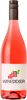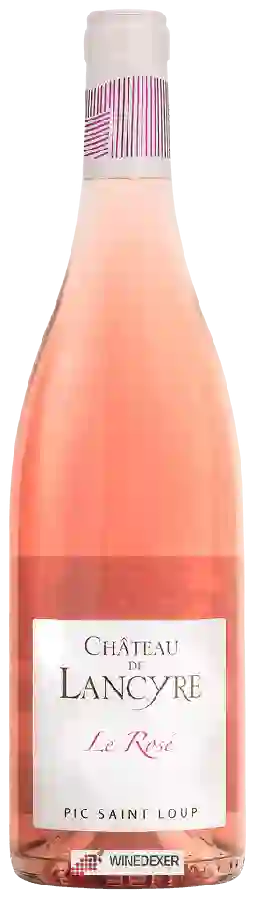
Château de LancyreLe Rosé
 Pink wine



In the mouth this pink wine is a with a nice freshness.
This wine generally goes well with vegetarian, appetizers and snacks or lean fish.

Taste structure of the Le Rosé from the Château de Lancyre
Light | Bold | |
Dry | Sweet | |
Soft | Acidic |
In the mouth the Le Rosé of Château de Lancyre in the region of Languedoc-Roussillon is a with a nice freshness.
Wine flavors and olphactive analysis






On the nose the Le Rosé of Château de Lancyre in the region of Languedoc-Roussillon often reveals types of flavors of cherry, citrus or peach and sometimes also flavors of minerality, red fruit or strawberries.
Food and wine pairings with Le Rosé
Pairings that work perfectly with Le Rosé



Original food and wine pairings with Le Rosé


The Le Rosé of Château de Lancyre matches generally quite well with dishes of pasta, vegetarian or appetizers and snacks such as recipes of pasta romantica, quiche with leeks and fresh salmon from flo or bacon-gruyere-tomato cake.
Details and technical informations about Château de Lancyre's Le Rosé.
Discover the grape variety: Muscat Hamburg
Aromatic sweet and liqueur reds with a garnet ruby hue, ample and fragrant palate; powerful muscat signature aromas of rose, red fruits (cherry, raspberry), exotic fruits and honey. Also a prized table grape exported worldwide for its appearance and muscat flavour. Synonym for Muscat of Hamburg, a black aromatic variety bred in England in 1837 (Muscat of Alexandria × Schiava Grossa).
Last vintages of this wine
The best vintages of Le Rosé from Château de Lancyre are 2015, 2017, 2014, 2013 and 2018.
Informations about the Château de Lancyre
The Château de Lancyre is one of of the world's greatest estates. It offers 20 wines for sale in the of Pic-Saint-Loup to come and discover on site or to buy online.

The wine region of Pic-Saint-Loup
Languedoc flagship AOC north of Montpellier, shaded by its emblematic peak: signature Syrah as king red (≥50%) with Grenache and Mourvèdre — deep robe with notes of blackcurrant, blackberry, blueberry, violet, garrigue, liquorice and spices, fine tannins and signature mineral freshness from altitude, long finish. Fresh, moreish rosés as backup. Autonomous AOC since 2017 (~1,200 ha), garrigue limestone terroirs, Mediterranean climate tempered by cool nights.
The wine region of Languedoc-Roussillon
Largest single French vineyard, dominated by sunny, generous reds. Spicy Syrah, candied Grenache (ripe fruit, garrigue), structured Carignan, deep Mourvèdre, supple Cinsault. Stars: structured Corbières, Minervois, Faugères, Saint-Chinian; round Côtes-du-Roussillon. Legendary vins doux naturels: Banyuls and Maury (fortified Grenache) with notes of cocoa, fig, prune.
The word of the wine: Maceration
Prolonged contact and exchange between the juice and the grape solids, especially the skin. Not to be confused with the time of fermentation, which follows maceration. The juice becomes loaded with colouring matter and tannins, and acquires aromas. For a rosé, the maceration is short so that the colour does not "rise" too much. For white wines too, a "pellicular maceration" can be practised, which allows the wine to acquire more fat.