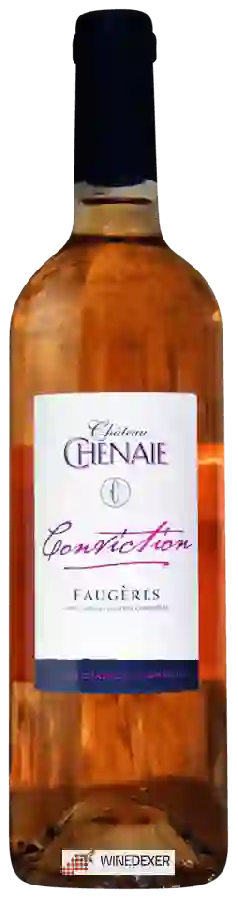
Château ChênaieConviction Rosé
 Pink wine
This wine generally goes well with vegetarian, appetizers and snacks or lean fish.

Food and wine pairings with Conviction Rosé
Pairings that work perfectly with Conviction Rosé



Original food and wine pairings with Conviction Rosé


The Conviction Rosé of Château Chênaie matches generally quite well with dishes of pasta, vegetarian or appetizers and snacks such as recipes of eggplant and zucchini lasagna, spinach and goat cheese quiche or beet and goat aperitif verrines.
Details and technical informations about Château Chênaie's Conviction Rosé.
Discover the grape variety: Băbească Neagră
Light, fruity reds with a pale ruby robe, silky tannins and an airy, lively palate, with signature aromas of fresh red fruits (cherry, raspberry, redcurrant), soft spices and Moldavian floral notes. An elegant profile to drink young. Star of the Babeasca de Nicorești AOC in eastern Romania, among the oldest Romanian grapes. Native black grape of Romanian Moldavia, mainly grown at Nicorești.
Informations about the Château Chênaie
The Château Chênaie is one of of the world's great estates. It offers 14 wines for sale in the of Faugères to come and discover on site or to buy online.

The wine region of Faugères
Languedoc AOC on signature Palaeozoic schist, foothills of the Massif Central. Dense, mineral reds dominate: vibrant Syrah with signature notes of blackberry, violet, black pepper, garrigue and a smoky touch, tight tannins. Sun-drenched Grenache (ripe cherry, kirsch, spice), Mourvèdre compulsory for depth (leather, game, liquorice) — the only Languedoc AOC to require it. Carignan and Cinsault in support.
The wine region of Languedoc-Roussillon
Largest single French vineyard, dominated by sunny, generous reds. Spicy Syrah, candied Grenache (ripe fruit, garrigue), structured Carignan, deep Mourvèdre, supple Cinsault. Stars: structured Corbières, Minervois, Faugères, Saint-Chinian; round Côtes-du-Roussillon. Legendary vins doux naturels: Banyuls and Maury (fortified Grenache) with notes of cocoa, fig, prune.
The word of the wine: Bordeaux barrel
Barrels of 220 to 225 litres. The toasting of the barrel to bend the staves (curved boards used to make the barrels) can vary according to the coopers and the demand. A gentle and slow toasting has little effect on the aromas. On the other hand, a strong toasting gives aromas of coffee or cocoa which will influence the taste of the wine. A wine barrel has already been aged for a year and has less impact on the wine than a new barrel.