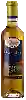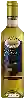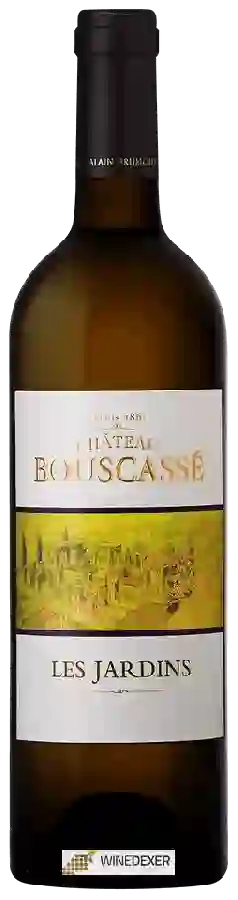
Château BouscasséLes Jardins
 White wine



This wine is a blend of 2 varietals which are the Petit Courbu and the Petit Manseng.
This wine generally goes well with
The Les Jardins of the Château Bouscassé is in the top 10 of wines of South West.

Wine flavors and olphactive analysis





On the nose the Les Jardins of Château Bouscassé in the region of South West often reveals types of flavors of pineapple, oaky or tropical and sometimes also flavors of citrus, apples or peach.
Details and technical informations about Château Bouscassé's Les Jardins.
Discover the grape variety: Petit Courbu
Aromatic, structured whites with a golden robe, ample palate and preserved acidity, showing refined aromas of yellow fruits (pear, peach), candied citrus, white flowers, honey and limestone mineral notes. Adds roundness and richness to Béarn blends. Precious component of Jurançon AOC (dry and sweet), Pacherenc du Vic-Bilh AOC and Béarn AOC, complementing petit and gros manseng. Very rare autochthonous Béarn variety, making a comeback for its aromatic finesse.
Last vintages of this wine
The best vintages of Les Jardins from Château Bouscassé are 2007, 2014, 2006, 2015 and 2011.
Informations about the Château Bouscassé
The Château Bouscassé is one of of the world's greatest estates. It offers 15 wines for sale in the of South West to come and discover on site or to buy online.

The wine region of South West
French mosaic of strong identities south of Bordeaux. Cahors and its Malbec ("black wine"): deep reds with notes of blackberry, plum, violet, tobacco and cocoa, firm tannins. Madiran and its dense, age-worthy Tannat. Jurançon whites: golden sweet (apricot, honey, pineapple) and lively dry from Petit Manseng.
The word of the wine: Côte des Bar
This is the name given to the vineyards of the Aube, which are closer to Burgundy, and some of the wines produced here bear witness to this proximity. The pinot noir dominates, the meunier is practically absent. Two crus have become references: Riceys, where a rosé without bubbles is also produced, and Montgueux near Troyes, renowned for its Chardonnay.