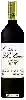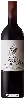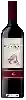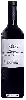
Château BellevueSaint-Émilion Grand Cru (Grand Cru Classé)
 Red wine


In the mouth this red wine is a powerful with a nice balance between acidity and tannins.
This wine generally goes well with poultry, beef or game (deer, venison).
Taste structure of the Saint-Émilion Grand Cru (Grand Cru Classé) from the Château Bellevue
Light | Bold | |
Smooth | Tannic | |
Dry | Sweet | |
Soft | Acidic |
In the mouth the Saint-Émilion Grand Cru (Grand Cru Classé) of Château Bellevue in the region of Bordeaux is a powerful with a nice balance between acidity and tannins.
Wine flavors and olphactive analysis




On the nose the Saint-Émilion Grand Cru (Grand Cru Classé) of Château Bellevue in the region of Bordeaux often reveals types of flavors of earth, oak or black fruit.
Food and wine pairings with Saint-Émilion Grand Cru (Grand Cru Classé)
Pairings that work perfectly with Saint-Émilion Grand Cru (Grand Cru Classé)



Original food and wine pairings with Saint-Émilion Grand Cru (Grand Cru Classé)

The Saint-Émilion Grand Cru (Grand Cru Classé) of Château Bellevue matches generally quite well with dishes of beef, lamb or game (deer, venison) such as recipes of beef marengo "my mom" style, moroccan tagine with lamb and cardoons or rabbit with prunes in my grandmother's style.
Details and technical informations about Château Bellevue's Saint-Émilion Grand Cru (Grand Cru Classé).
Discover the grape variety: Gewurztraminer
Gewurztraminer rosé is a grape variety that originated in France. It produces a variety of grape specially used for wine making. It is rare to find this grape to eat on our tables. This variety of vine is characterized by small bunches and small grapes. Gewurztraminer rosé can be found in many vineyards: Alsace, Loire Valley, Languedoc & Roussillon, Jura, Champagne, Lorraine, Provence & Corsica, Rhone Valley, Savoie & Bugey, Beaujolais, South West.
Last vintages of this wine
The best vintages of Saint-Émilion Grand Cru (Grand Cru Classé) from Château Bellevue are 2009, 2008, 2007, 2006
Informations about the Château Bellevue
The Château Bellevue is one of of the world's greatest estates. It offers 2 wines for sale in the of Libournais to come and discover on site or to buy online.

The wine region of Libournais
Rich in world-renowned wines, such as Saint-Emilion Grands Crus and Bordeaux/libournais/pomerol">Pomerol, the Libourne region Lies on the right bank of the Dordogne, on the edge of the Périgord. The region takes its name from the port city of Libourne, where many merchants from the Correze settled in the early 19th century. But its jewel is the small medieval city of Saint-Emilion, listed as a Unesco World Heritage Site and one of the most famous showcases of the Bordeaux wine region. The region is very homogeneous due to its hilly landscapes, its geology (predominantly limestone subsoil), the concentration of vineyards and the importance of family-run, small or medium-sized estates, which contrast with the large Medoc-type estates.
The wine region of Bordeaux
Bordeaux, in southwestern France, is one of the most famous, prestigious and prolific wine regions in the world. The majority of Bordeaux wines (nearly 90% of the production Volume) are the Dry, medium and Full-bodied red Bordeaux blends for which it is famous. The finest (and most expensive) are the wines of the great châteaux of Haut-Médoc and the right bank appellations of Saint-Émilion and Pomerol. The former focuses (at the highest level) on Cabernet Sauvignon, the latter on Merlot.
The word of the wine: Reduction
A physiological and chemical phenomenon that occurs in wine in the absence of oxygen. The smell of reduction is characterized by animal and sometimes fetid notes that disappear in principle with aeration. It is recommended to decant reduced wines.