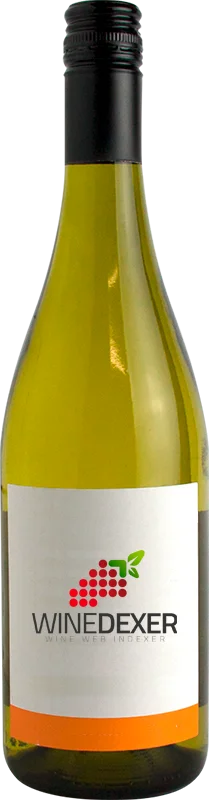
Winery Charles MullerPinot Blanc
 White wine



In the mouth this white wine is a with a nice freshness.
This wine generally goes well with rich fish (salmon, tuna etc), shellfish or mild and soft cheese.
Taste structure of the Pinot Blanc from the Winery Charles Muller
Light | Bold | |
Dry | Sweet | |
Soft | Acidic |
In the mouth the Pinot Blanc of Winery Charles Muller in the region of Alsace is a with a nice freshness.
Food and wine pairings with Pinot Blanc
Pairings that work perfectly with Pinot Blanc



Original food and wine pairings with Pinot Blanc

The Pinot Blanc of Winery Charles Muller matches generally quite well with dishes of rich fish (salmon, tuna etc), shellfish or mild and soft cheese such as recipes of pan-fried potatoes with smoked salmon and rosemary, spanish paella or sun burger.
Details and technical informations about Winery Charles Muller's Pinot Blanc.
Discover the grape variety: Pinot blanc
Pinot Blanc is a grape variety that originated in Burgundy, mutated from Pinot Gris. Today, it is grown in Alsace where it is called klevner when blended with auxerrois. The continental climate, with its cold winters and hot summers, is particularly suited to pinot blanc. It is resistant to frost in winter and in summer, the roots draw the minerals it needs from the warm soil. Its bunches are made up of small berries with thick skins and melting pulp that produce fruity, spicy wines, balanced between acidity and alcohol. pinot blanc is also used for crémants and sparkling wines. Pinot Blanc is also used for Crémant and sparkling wines. It is widely grown in Italy, where it covers almost 7,000 hectares, and is also found in Germany, Austria, Canada and South Africa.
Last vintages of this wine
The best vintages of Pinot Blanc from Winery Charles Muller are 2016, 0, 2013
Informations about the Winery Charles Muller
The Winery Charles Muller is one of of the world's greatest estates. It offers 26 wines for sale in the of Alsace to come and discover on site or to buy online.

The wine region of Alsace
Alsace, located in the extreme north-east of France, is Distinguished from other French wine regions by its strong Franco-Germanic influences. These influences are the result of a back-and-forth between the German and French sovereignties over the last few centuries. They can be seen not only in the architecture and culture of Alsace, but also in the wines. Alsace wines are produced under three main appellations: Alsace and Alsace Grand Cru for still white wines (Sweet and Dry), and Crémant d'Alsace for Sparkling wines.
The word of the wine: Lactic (acid)
Acid obtained by malolactic fermentation.