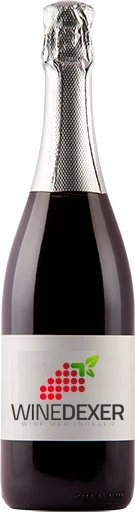
Winery Charles KellnerCremant D Alsace Rose Brut
 Sparkling wine
This wine generally goes well with poultry, appetizers and snacks or lean fish.
Food and wine pairings with Cremant D Alsace Rose Brut
Pairings that work perfectly with Cremant D Alsace Rose Brut



Original food and wine pairings with Cremant D Alsace Rose Brut


The Cremant D Alsace Rose Brut of Winery Charles Kellner matches generally quite well with dishes of shellfish, poultry or appetizers and snacks such as recipes of mussels with marinara, baked chicken legs or reunion pepper candy.
Details and technical informations about Winery Charles Kellner's Cremant D Alsace Rose Brut.
Discover the grape variety: Verdicchio blanc
This grape variety was known for a long time in the central region of Italy and is now cultivated in almost all the wine-producing regions of this country. Under the name of peverella, it can still be found in Brazil, where it has occupied large areas for a long time. In France, it is almost unknown. It would seem that it has many relatives, in particular with varieties of Italian origin, known or little known, without us being able to quote them with certainty because the doubt still remains, to be followed! The pink verdicchio exists but is not related to any of them.
Informations about the Winery Charles Kellner
The Winery Charles Kellner is one of of the world's greatest estates. It offers 9 wines for sale in the of Alsace to come and discover on site or to buy online.

The wine region of Alsace
Alsace, located in the extreme north-east of France, is Distinguished from other French wine regions by its strong Franco-Germanic influences. These influences are the result of a back-and-forth between the German and French sovereignties over the last few centuries. They can be seen not only in the architecture and culture of Alsace, but also in the wines. Alsace wines are produced under three main appellations: Alsace and Alsace Grand Cru for still white wines (Sweet and Dry), and Crémant d'Alsace for Sparkling wines.
The word of the wine: INAO glass
Glass adapted to wine tasting, created in the 1970s by the Institut national des appellations d'origine. At the time, it had the advantage of offering a standardised tool to all tasters. It is characterized by a wide base that allows for good ventilation and a narrow mouth (opening of the glass) to concentrate the aromas. Many high-performance glasses have been created based on this model.