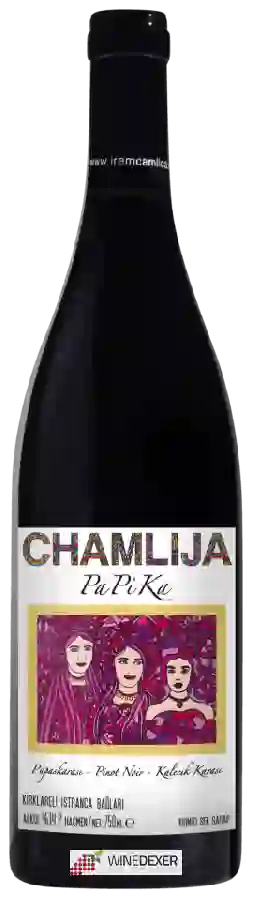
Winery ChamlijaPaPiKa
 Red wine



This wine is a blend of 2 varietals which are the Kalecik karasi and the Pinot noir.
This wine generally goes well with pork, poultry or veal.

Wine flavors and olphactive analysis


On the nose the PaPiKa of Winery Chamlija in the region of Thrace often reveals types of flavors of earth.
Food and wine pairings with PaPiKa
Pairings that work perfectly with PaPiKa



Original food and wine pairings with PaPiKa


The PaPiKa of Winery Chamlija matches generally quite well with dishes of veal, pork or game (deer, venison) such as recipes of duck with orange, chicken in red wine or rabbit with beer.
Details and technical informations about Winery Chamlija's PaPiKa.
Discover the grape variety: Kalecik karasi
Supple, elegant reds with a light ruby robe, fine tannins and fresh acidity, showing delicate aromas of strawberry, raspberry, red cherry, rose, sweet spices and floral notes. Airy, refreshing palate, compared to pinot noir for its finesse. Star of the Kalecik slopes along the Kızılırmak river near Ankara, one of the great ambassadors of the Turkish wine revival. Autochthonous Anatolian variety, saved from extinction by Ankara University in the 1970s.
Last vintages of this wine
The best vintages of PaPiKa from Winery Chamlija are 0
Informations about the Winery Chamlija
The Winery Chamlija is one of of the world's great estates. It offers 75 wines for sale in the of Thrace to come and discover on site or to buy online.

The wine region of Thrace
Eastern region shared between Turkey, Greece and Bulgaria, a fascinating native palette. On the Turkish side, Öküzgözü ("ox eye") is the signature red: deep ruby with signature notes of ripe cherry, raspberry, plum, spice and a floral touch, supple tannins and lively acidity. More tannic, structured Boğazkere, local Papazkarası. Fresh Narince whites (citrus, flowers, almond), lively Emir.
The word of the wine: Final
A more or less lasting impression that is felt in the mouth once the wine has been swallowed (or spat out in the case of a professional tasting). The finish can be short or persistent.


