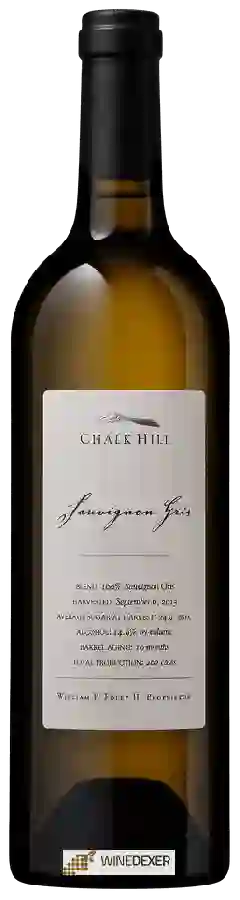
Winery Chalk HillSauvignon Gris
 White wine


This wine generally goes well with
The Sauvignon Gris of the Winery Chalk Hill is in the top 30 of wines of Chalk Hill.
Wine flavors and olphactive analysis





On the nose the Sauvignon Gris of Winery Chalk Hill in the region of California often reveals types of flavors of non oak, earth or microbio and sometimes also flavors of oak, tree fruit or spices.
Details and technical informations about Winery Chalk Hill's Sauvignon Gris.
Discover the grape variety: Araignan
Araignan blanc is a grape variety that originated in France (south of France). It produces a variety of grape specially used for wine making. It is rare to find this grape to eat on our tables. This variety of grape is characterized by large bunches and large grapes. Araignan blanc is found in the vineyards of Provence and Corsica.
Last vintages of this wine
The best vintages of Sauvignon Gris from Winery Chalk Hill are 2014, 0
Informations about the Winery Chalk Hill
The Winery Chalk Hill is one of of the world's great estates. It offers 43 wines for sale in the of Chalk Hill to come and discover on site or to buy online.

The wine region of Chalk Hill
The wine region of Chalk Hill is located in the region of Sonoma County of California of United States. Wineries and vineyards like the Domaine Arnot-Roberts or the Domaine Calluna Vineyards produce mainly wines red, white and sweet. The most planted grape varieties in the region of Chalk Hill are Cabernet-Sauvignon, Chardonnay and Cabernet franc, they are then used in wines in blends or as a single variety. On the nose of Chalk Hill often reveals types of flavors of blackberry, almonds or honey and sometimes also flavors of grass, orange or flint.
The wine region of California
California is the largest and most important wine region in the United States. It represents the southern two-thirds (850 miles or 1,370 kilometers) of the country's west coast. (Oregon and Washington make up the rest. ) The state also spans nearly 10 degrees of latitude.
The word of the wine: Old vines
There are no specific regulations governing the term "vieilles vignes". After 20 to 25 years, the yields stabilize and tend to decrease, the vines are deeply rooted, and the grapes that come from them give richer, more concentrated, more sappy wines, expressing with more nuance the characteristics of their terroir. It is possible to find plots of vines that claim to be a century old.