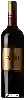
Winery Cellier des TempliersBanyuls Grand Cru Ancestral Doux Naturel
 Natural sweet wine
This wine generally goes well with poultry, rich fish (salmon, tuna etc) or shellfish.
Food and wine pairings with Banyuls Grand Cru Ancestral Doux Naturel
Pairings that work perfectly with Banyuls Grand Cru Ancestral Doux Naturel



Original food and wine pairings with Banyuls Grand Cru Ancestral Doux Naturel


The Banyuls Grand Cru Ancestral Doux Naturel of Winery Cellier des Templiers matches generally quite well with dishes of mature and hard cheese, blue cheese or aperitif such as recipes of truffade (auvergne - cantal - 15), cream of chicory soup with roquefort in the thermomix or lili's gressins.
Details and technical informations about Winery Cellier des Templiers's Banyuls Grand Cru Ancestral Doux Naturel.
Discover the grape variety: Elbling
Elbling blanc is a grape variety that originated in France. It produces a variety of grape specially used for wine making. It is rare to find this grape for eating on our tables. White Elbling can be found grown in these vineyards: South West, Cognac, Bordeaux, Provence & Corsica, Rhone Valley.
Informations about the Winery Cellier des Templiers
The Winery Cellier des Templiers is one of of the world's great estates. It offers 30 wines for sale in the of Banyuls Grand Cru to come and discover on site or to buy online.

The wine region of Banyuls Grand Cru
The wine region of Banyuls Grand Cru is located in the region of Banyuls of Languedoc-Roussillon of France. Wineries and vineyards like the Domaine Terres des Templiers or the Domaine Terres des Templiers produce mainly wines natural sweet and red. On the nose of Banyuls Grand Cru often reveals types of flavors of oak, coffee or raisin and sometimes also flavors of apricot, red fruit or vegetal. We currently count 10 estates and châteaux in the of Banyuls Grand Cru, producing 31 different wines in conventional, organic and biodynamic agriculture.
The wine region of Languedoc-Roussillon
Languedoc (formerly Coteaux du Languedoc) is a key appellation used in the Languedoc-Roussillon wine region of southern France. It covers Dry table wines of all three colors (red, white and rosé) from the entire region, but leaves Sweet and Sparkling wines to other more specialized appellations. About 75% of all Languedoc wines are red, with the remaining 25% split roughly down the middle between whites and rosés. The appellation covers most of the Languedoc region and almost a third of all the vineyards in France.
The word of the wine: Residual sugars
Sugars not transformed into alcohol and naturally present in the wine. The perception of residual sugars is conditioned by the acidity of the wine. The more acidic the wine is, the less sweet it will seem, given the same amount of sugar.