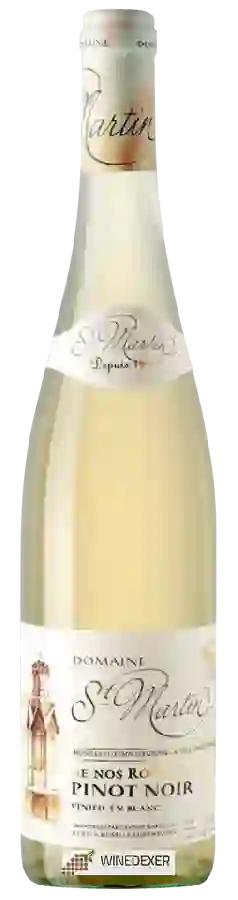
Caves St MartinDe Nos Rochers Pinot Noir Blanc
 White wine


This wine generally goes well with
Details and technical informations about Caves St Martin's De Nos Rochers Pinot Noir Blanc.
Discover the grape variety: Merlot
Merlot is a red grape variety with small black berries that appeared at the end of the 18th century. It is produced in most of the Bordeaux terroirs, where it represents 58% of the planted area, and its best terroir is located in Pomerol and Saint-Emilion on cool, clay-limestone soils. At the mythical Château Pétrus, the wine is made with 95% Merlot, with a dark, dense colour, aromas of red and black fruits and a superb range of flavours, the Merlot transforms during its ageing to give way to notes of prunes, undergrowth and spices. On the palate, it is supple with distinguished tannins. It is often blended with Cabernet Sauvignon. Merlot is no longer exclusive to Bordeaux, it is nowadays vinified all over the world.
Last vintages of this wine
The best vintages of De Nos Rochers Pinot Noir Blanc from Caves St Martin are 0
Informations about the Caves St Martin
The Caves St Martin is one of of the world's great estates. It offers 49 wines for sale in the of Moselle to come and discover on site or to buy online.

The wine region of Moselle
Moselle is an appellation covering white, red and rosé wines from an area in the administrative department of Moselle in Northeastern France. The Vineyard">Vineyard zone covers land on both sides of the Mosel River (known locally as the Moselle), before it flows north to form the heart of Germany's famed Mosel wine region. Moselle wines are most often light, Aromatic whites with crisp Acidity. They are made predominantly from the Auxerrois Blanc and Müller-Thurgau grape varieties.
The word of the wine: Musty (taste of)
A disgusting taste due to a defect in the grapes or, more commonly, a defect in the barrel.