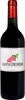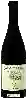
Caves du MistralLe Campagnet Pays Rouge De Terroir
 Red wine


In the mouth this red wine is a powerful with a nice balance between acidity and tannins.
This wine generally goes well with beef, veal or pasta.
Taste structure of the Le Campagnet Pays Rouge De Terroir from the Caves du Mistral
Light | Bold | |
Smooth | Tannic | |
Dry | Sweet | |
Soft | Acidic |
In the mouth the Le Campagnet Pays Rouge De Terroir of Caves du Mistral in the region of Languedoc-Roussillon is a powerful with a nice balance between acidity and tannins.
Food and wine pairings with Le Campagnet Pays Rouge De Terroir
Pairings that work perfectly with Le Campagnet Pays Rouge De Terroir



Original food and wine pairings with Le Campagnet Pays Rouge De Terroir
The Le Campagnet Pays Rouge De Terroir of Caves du Mistral matches generally quite well with dishes of beef, pasta or veal such as recipes of piglet shoulder with melting baked apples, makroud or cordon bleu with veal and cured ham.
Details and technical informations about Caves du Mistral's Le Campagnet Pays Rouge De Terroir.
Discover the grape variety: Cabernet-Cantor
Interspecific crossing between Chancellor and Solaris made in 1989 by Norbert Becker of the Freiburg Research Institute in Germany. Cabernet-Cantor can be found in Germany, Switzerland, the Netherlands, Belgium, Lithuania, Poland, ... little known in France.
Informations about the Caves du Mistral
The Caves du Mistral is one of of the world's greatest estates. It offers 6 wines for sale in the of Languedoc-Roussillon to come and discover on site or to buy online.

The wine region of Languedoc-Roussillon
Languedoc (formerly Coteaux du Languedoc) is a key appellation used in the Languedoc-Roussillon wine region of southern France. It covers Dry table wines of all three colors (red, white and rosé) from the entire region, but leaves Sweet and Sparkling wines to other more specialized appellations. About 75% of all Languedoc wines are red, with the remaining 25% split roughly down the middle between whites and rosés. The appellation covers most of the Languedoc region and almost a third of all the vineyards in France.
The word of the wine: Malolactic fermentation
Called second fermentation or malo for short. It is the degradation (under the effect of bacteria) of the malic acid naturally present in the wine into milder, less aggressive lactic acid. Some producers or wineries refuse this operation by "blocking the malo" (by cold and adding SO2) to keep a maximum of acidity which carries the aromas and accentuates the sensation of freshness.